
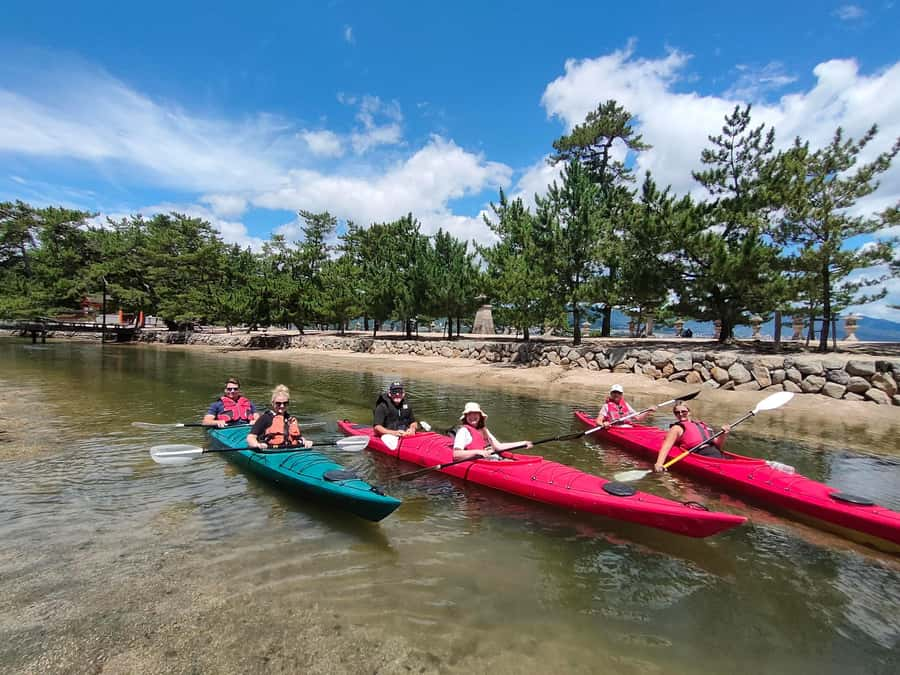
REVIEW · HISTORICAL TOURS
Miyajima World Heritage Torii Kayak Tour
See Miyajima from its quiet side. I love the close water-level view of the Great Torii and the small-group setting, capped at 10 people. I also like that guides such as Shin share local stories and take digital photos for you. The main catch is that the optional shore stop depends on tides and weather.
This is a gentle outing rather than a hard workout. You paddle from a small beach near the ferry terminal, pass Nagahama Shrine and Kiyomori Shrine, and approach Itsukushima’s famous gate from an angle most visitors never get. If the sea is calm and timing works, you may also walk around Miyajima before paddling back.
Key points to know before you book
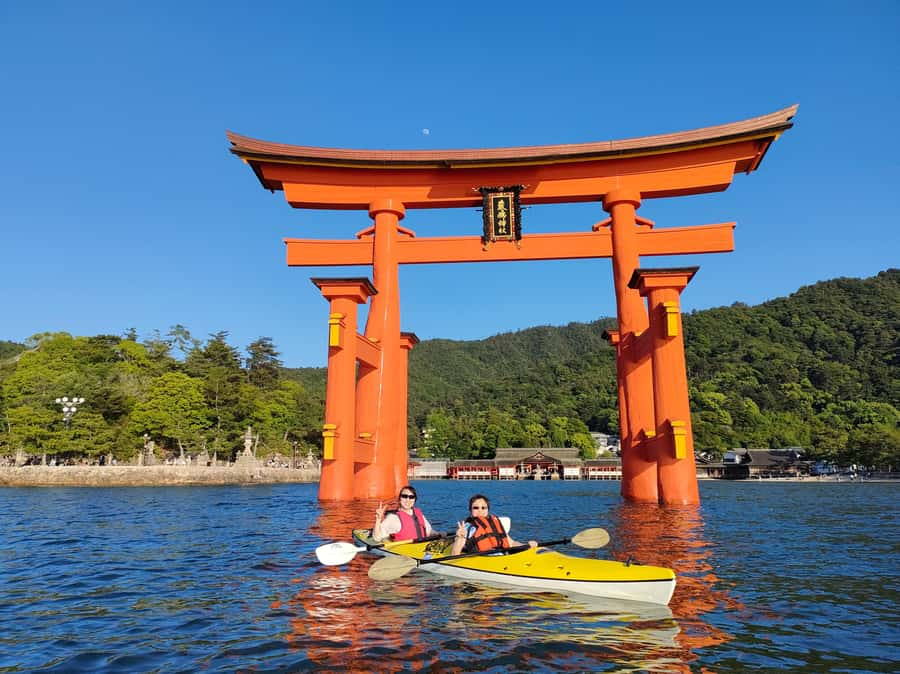
- The Great Torii looks different from the sea: Tide levels can leave its base underwater or expose more of the structure, giving you two very different views.
- The meeting beach is close but easy to miss: It is about a four-minute walk from Miyajima Pier, with kayaks on the sand and no nearby buildings.
- Shin receives especially strong praise: He has adjusted start times around the tide, shared local stories, taken photos, and suggested dinner spots.
- The pace suits first-timers: You receive instruction, a safety briefing, and a warm-up paddle before heading toward the shrine.
- The shore stop is not guaranteed: Omotesando, Daisho-in Temple, and Senjo-kaku are possible only when tide and weather allow.
- The weight rules need attention: A single kayak allows up to 250 pounds, or 113 kilograms, while a tandem allows up to 420 pounds, or 190 kilograms.
Why kayaking gives Miyajima a fresh angle
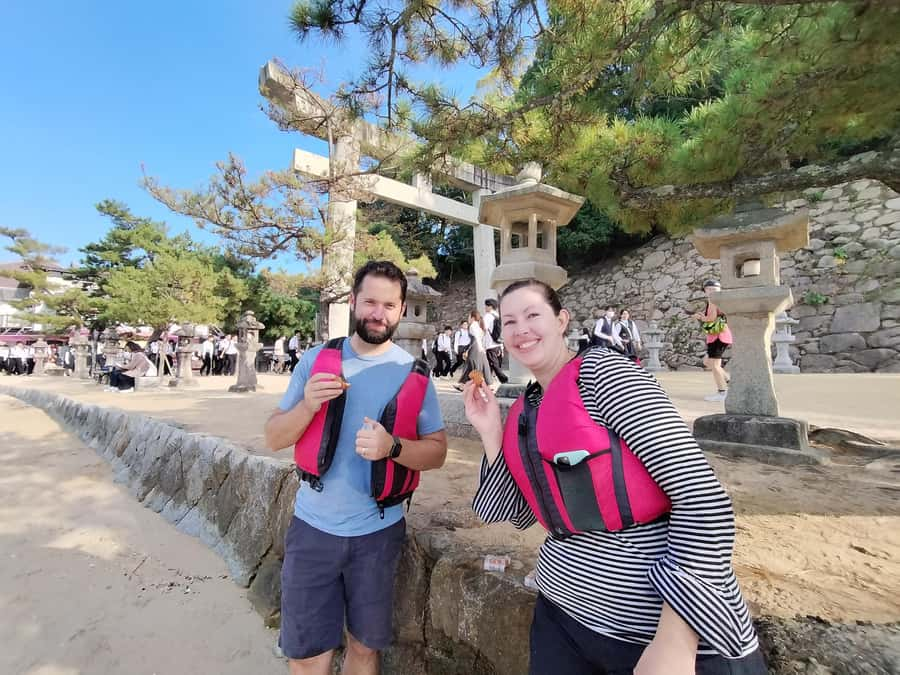
Miyajima is famous for the Great Torii of Itsukushima Shrine, but most people see it from the ferry, the shore, or the crowded approach to the shrine. A kayak puts you at water level, where the gate frames the island and the shrine grounds in a much quieter way.
You also get a better sense of how the shrine relates to the sea. The gate is not simply a photo prop offshore. Tide, weather, passing ferries, wooded hills, smaller shrines, and oyster banks all become part of the scene around it.
I especially like the fact that this is a small-group experience. With no more than 10 participants, the guide can keep an eye on beginners and pause for questions without turning the outing into a large procession of boats.
The two-hour length is useful for a busy Miyajima day. You get a proper outing, not just a short paddle, but you still have time before or after for the shrine, shopping street, ropeway, or ferry connections.
A few more paddling days around Japan worth a look
- Emerald Cave Express Kayak Tour with Scenic & Historic Stops
★ 5.0 · 1,522 reviews - Kayak With Dolphins in Historic Shem Creek
★ 5.0 · 407 reviews - Lumbarda: Half-Day Kayaking and History with Wine delight
★ 5.0 · 49 reviews
Starting near Miyajima Pier
The meeting point is a small beach about a four-minute walk from Miyajima Pier. There are no buildings beside it, so do not expect a shop or large sign to guide you. Look for the kayaks stored on the beach.
You should also walk about 50 meters from the meeting point to find a small torii gate. That detail can help confirm you are in the right place, especially if you arrive early and the beach feels unusually quiet.
The location saves you from arranging a separate taxi or long transfer after arriving by ferry. Hotel pickup and drop-off are not included, so you need to reach Miyajima on your own.
Once you arrive, you change into kayaking gear and put personal belongings into waterproof dry bags. Bring quick-dry clothing, sandals, a hat, and a change of clothes. Rental shoes are not included, so do not count on receiving footwear.
A calm start with useful instruction
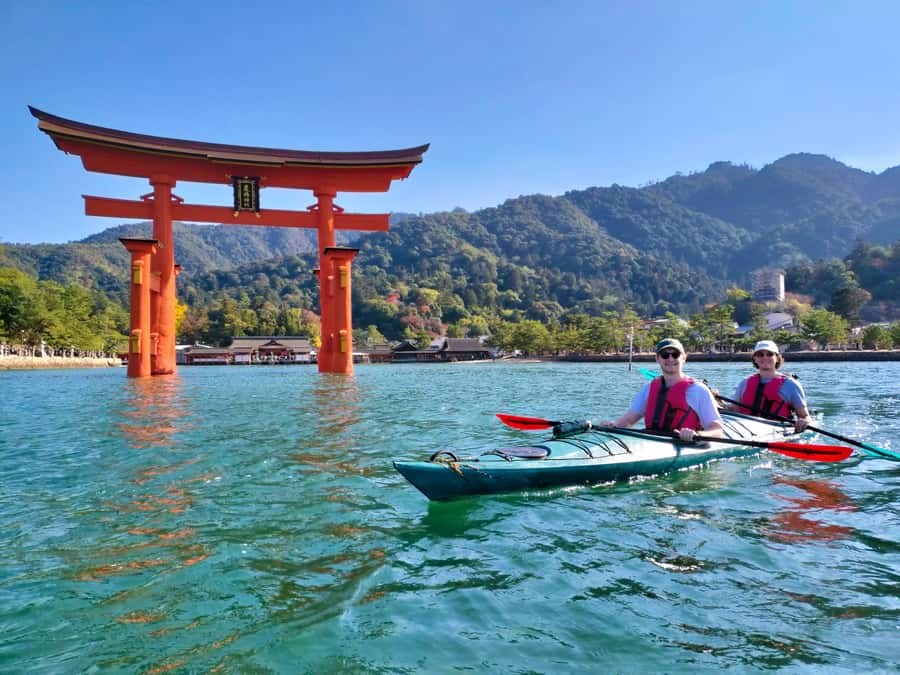
The guide begins with a short orientation and safety briefing. If you have never used a kayak, you receive basic paddling instruction before leaving the beach.
That matters here. A beginner does not need to arrive with perfect technique, but you do need to listen carefully and feel comfortable following the guide’s directions. The tour begins with a warm-up paddle, giving you time to find a steady rhythm before the main view appears.
The equipment package includes the kayak, paddle, and lifejacket. The slow opening also lets the guide check that everyone is comfortable and moving together.
The route uses calm coastal water, but this is still a water activity. People prone to seasickness may find it uncomfortable, even with a gentle pace. The experience is not suitable for people over 264 pounds, or 120 kilograms, and the separate kayak limits are important if you are close to the stated weights.
Nagahama Shrine and the first coastal views
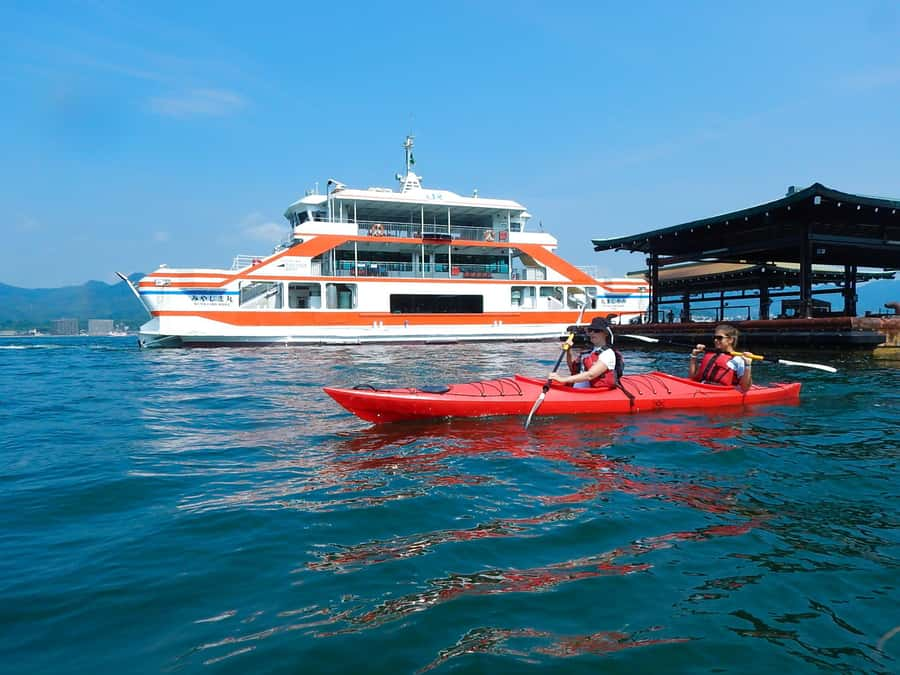
The first marked stop is Nagahama Shrine, reached after the safety briefing and scenic paddle. You spend about 15 minutes in this part of the route, with the guide pointing out the coastal setting and nearby sights.
This section helps you settle into the boat. You can look back toward Miyajima’s pine-covered hills, watch ferries in the distance, and see how the shoreline changes as you leave the ferry area.
The water-level view is the point. From a kayak, the island feels less like a sightseeing stop and more like a place connected to the sea. The guide’s local stories give the scenery more meaning than a quick photograph from the ferry deck.
Do not expect a long land visit at Nagahama Shrine. It is mainly a guided coastal stop and part of the route toward the Great Torii.
Same water, a different day out on it:
- Okinawa Iriomote Mangrove SUP or Canoe Tour
★ 5.0 · 214 reviews - Okinawa Ishigaki Mangrove SUP or Canoe Tour
★ 5.0 · 147 reviews - Okinawa Iriomote SUP or Canoe and Sightseeing in Yubujima Island
★ 5.0 · 124 reviews - Iriomote Island 1-Day Snorkeling & Mangrove SUP or Canoe
★ 5.0 · 119 reviews
Reaching the Great Torii by kayak
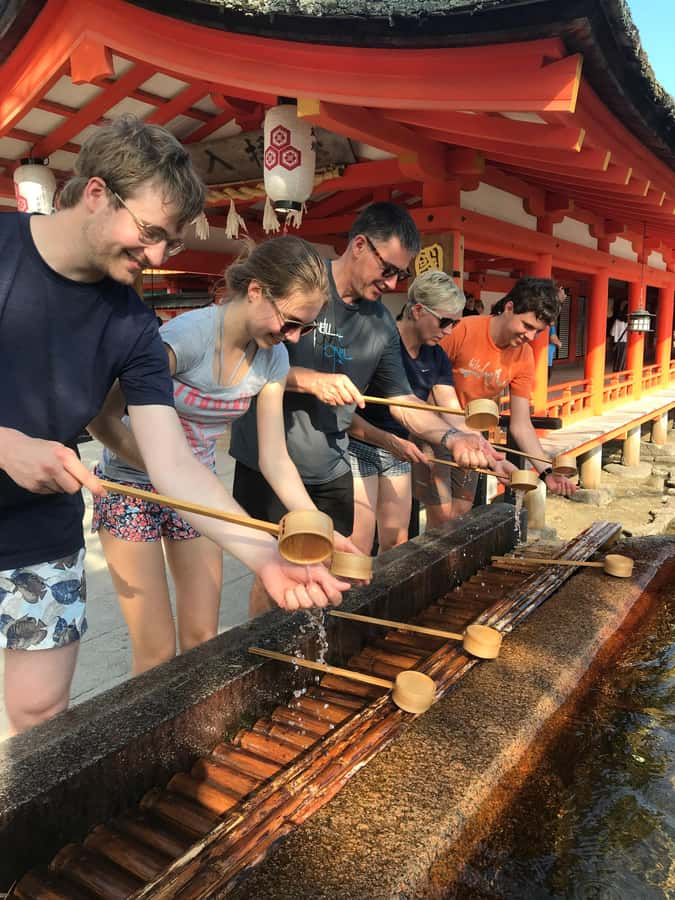
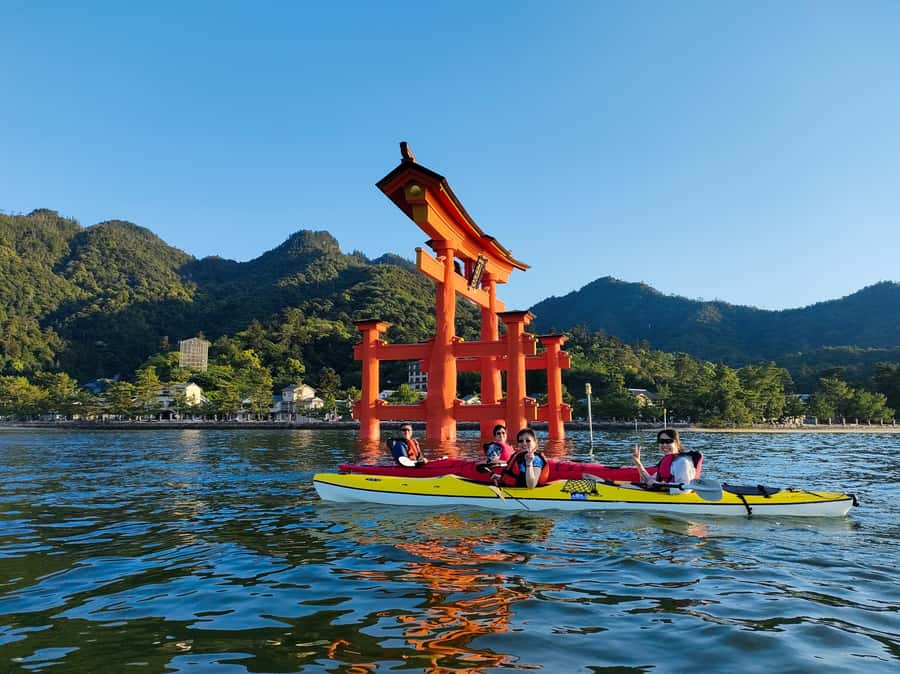
The main event is the paddle toward Itsukushima’s Great Torii. You spend about 20 minutes here with time for a photo stop, guided explanation, and close views from the water.
The appearance of the gate changes with the tide. At one point, its base may be surrounded by water. At another, more of the lower structure may be visible. Neither view is better in a simple way, but each tells you something about how strongly Miyajima’s identity is tied to tidal water.
This is also where the tour earns its price. A $96 experience is not cheap for two hours, but the cost includes equipment, instruction, a small group, a guide in English or Japanese, and digital photos taken during the outing. The unusual viewing angle is the real value. You are paying for access to a scene that cannot be recreated from the ordinary walking route.
Guide Shin has received special praise for working with the tide. He offered an earlier start so the Great Torii could be seen on the water, which shows why timing matters. If the gate is your main reason for booking, ask about tide conditions and the best available start time before you commit to a particular slot.
The guide also shares local anecdotes as you paddle. That makes the stop more than a quick photo break, while the small group should give you enough space to enjoy the view without feeling rushed.
Along the coast to Kiyomori Shrine
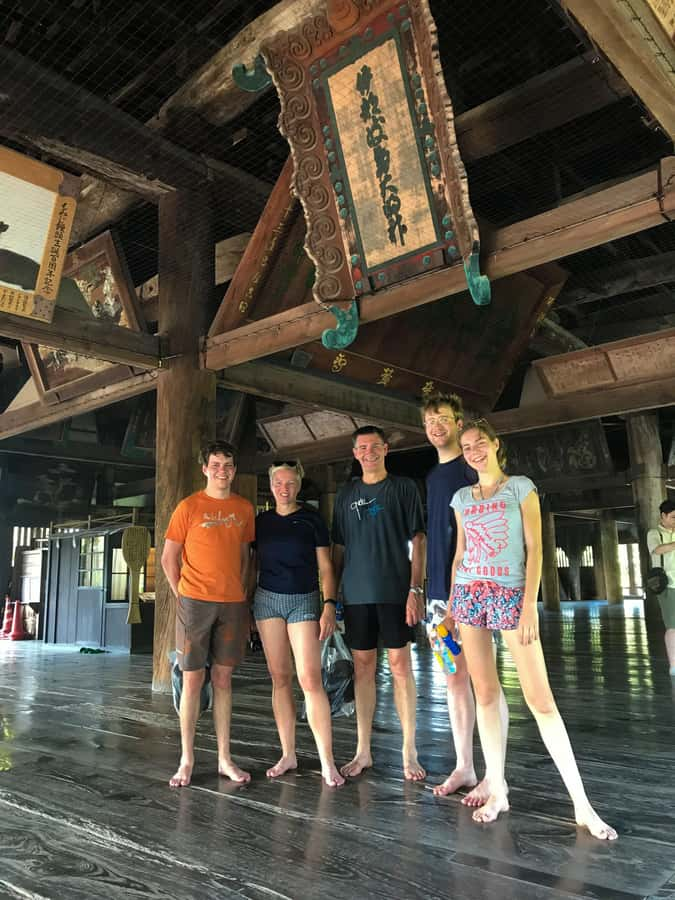
After the Great Torii, the group continues along Miyajima’s shoreline. The route passes forested slopes, temples, smaller shrines, and oyster banks, with occasional pauses for photos and quiet viewing.
Kiyomori Shrine is scheduled for about 15 minutes. It is a break and photo stop, giving your arms a rest after the approach to the gate.
This part of the tour may appeal most to people who want more than the headline sight. The Great Torii is the obvious prize, but the smaller shrines and working coastal details show a broader side of Miyajima.
The pace remains relaxed and beginner-friendly. You are not being pushed to race from one landmark to the next. Still, kayaking uses your shoulders and arms, so you should be comfortable with steady paddling for the duration of the outing.
The optional shore stop on Miyajima
If the tide and weather cooperate, the group may land on the island. This is a useful bonus, but you should treat it as a possibility rather than a promise.
A shore visit can include a walk along Omotesando, Miyajima’s shopping street. You might have time for traditional sweets or snacks, and the guide may adjust the schedule around the group’s interests and the tide.
Nearby cultural options include Daisho-in Temple and Senjo-kaku. The tour data does not promise entrance to either site, and temple entrance fees are not included, so think of this as a short island exploration rather than a full temple visit.
This optional stop gives the tour a pleasant change of pace. You go from sitting low in a kayak to walking on land, browsing local food, and seeing a little of the island’s inland side.
The drawback is predictability. If the weather turns poor or the tide makes landing awkward, you may stay on the water for the full route. If Omotesando or Daisho-in is high on your must-do list, schedule separate time for it.
Returning with photos and local suggestions
After the shore visit, if one takes place, you return to the kayaks and paddle toward the original beach. The guide may use a slightly different line back, giving you another view of the shrine and coastline.
At the beach, you change out of the equipment and finish with a short reflection or question period. Digital photos taken by the guides are provided at no extra charge, which is handy when your hands are busy paddling and your phone is better kept dry.
The guide can also suggest places to eat or visit afterward. Shin was praised for recommending dinner, a small but practical touch if you finish around mealtime.
Another guide, Solene, has also received strong praise for creating an enjoyable outing and helping people appreciate the scenery. That suggests the quality depends partly on the individual guide, but the English and Japanese language options make the tour accessible to a wide range of visitors.
How the $96 price works out
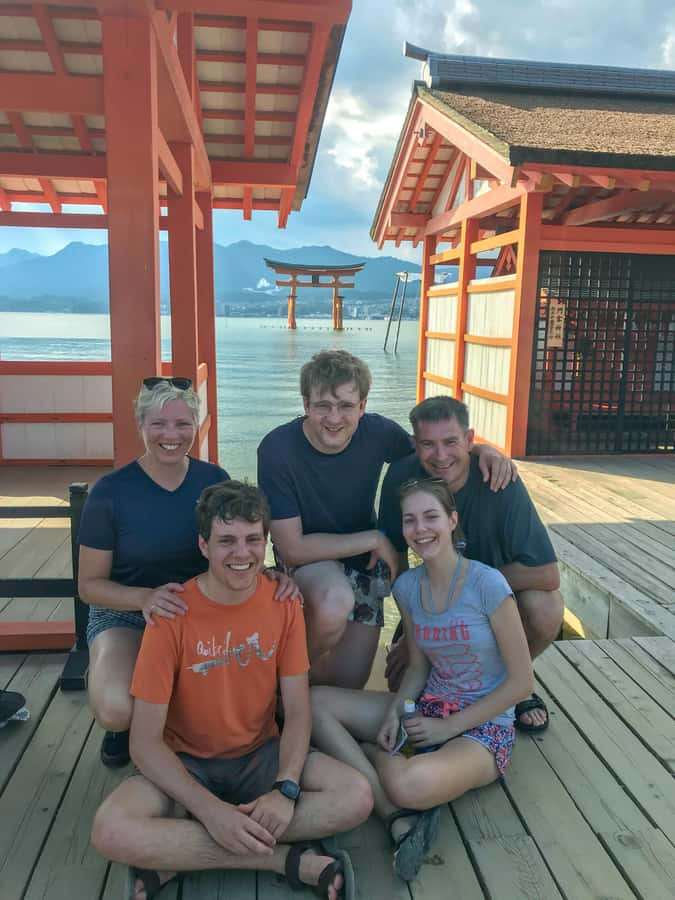
At $96 per person, the tour sits in the pricier category for a two-hour activity. I would not book it simply to fill two spare hours. I would book it if seeing the Great Torii from the water is a key goal.
The price includes:
- Kayak and paddle
- Lifejacket
- Basic instruction and safety guidance
- English or Japanese guide
- Digital photos
- The coastal route and views
You still pay separately for any temple entrance, rental shoes, food, and transportation to Miyajima. Hotel pickup and drop-off are not part of the package.
For a couple on a special trip, the cost can feel worthwhile because the setting is distinctive and guides have helped adjust timing around the tide. One French couple used the outing as part of a honeymoon and considered it a lasting highlight.
For families with teenagers, the activity also has appeal. The paddle offers a break from temple visits and shopping, and the chance to get near the Torii gives younger participants a clear goal.
Who should book this Miyajima kayak tour?
I would recommend it to first-time kayakers, couples, families with older children or teenagers, and anyone who wants a quieter view of Miyajima. It is especially suited to people who enjoy scenery, short guided activities, and small groups rather than fast adventure sports.
It is also a good choice if you have already seen the Great Torii from land and want a different perspective. The water changes the scale of the gate and gives you views of the shoreline that a standard walking route cannot provide.
I would hesitate if you dislike boats, often get seasick, or want a guaranteed visit to Omotesando or a temple. I would also check the weight limits carefully if you are near them, since the single and tandem kayak limits differ.
Weather and tide are central to the experience. The guide can adapt the timing, but no one can guarantee a particular water level or a shore landing. Keep some flexibility in your Miyajima schedule.
Practical tips for a smoother outing
Arrive ready to walk from the ferry terminal to the beach. Since the meeting place has no buildings nearby, allow time to identify the kayaks and small torii rather than rushing at the last minute.
Wear quick-dry clothes and sandals, and bring a change of clothing. A hat is useful in open sunlight. Alcohol and drugs are not allowed.
Ask about the tide if the Great Torii is your priority. Shin has adjusted departure times for this reason, and a small change in timing can alter the view of the gate.
Keep your schedule after the tour somewhat open. A shore landing may add a pleasant walk, but weather and water conditions can change the plan.
Free cancellation is available up to 24 hours before departure for a full refund, and you can reserve now and pay later. Those terms help if your Miyajima day depends on weather.
Should you book it?
Book this tour if you want the Great Torii to be the center of your Miyajima visit and you like the idea of earning the view with a calm paddle. The best reasons are the close approach, the small group, the guide stories, and the included photos.
Skip it if you need a guaranteed temple visit, dislike open water, or have no room for weather changes. For most able beginners who can handle two hours on the water, this is a thoughtful way to see Miyajima beyond the usual ferry and shopping street route.
FAQ
How long is the Miyajima World Heritage Torii Kayak Tour?
The tour lasts two hours, including preparation, instruction, paddling, sightseeing stops, and the return to the starting beach.
Where does the kayak tour meet?
It meets at a small beach about a four-minute walk from Miyajima Pier. Kayaks are stored on the beach, and a small torii gate is about 50 meters from the meeting point.
Is the tour suitable for beginners?
Yes. The guide provides basic paddling instruction, a safety briefing, and a warm-up paddle before the group approaches the Great Torii.
What languages are available?
Live guiding is available in English and Japanese.
How many people can join the group?
The group is limited to 10 participants.
What is included in the price?
The price includes the kayak, paddle, lifejacket, instruction, guided sightseeing, and digital photos taken by the guides.
Are temple entrance fees included?
No. Temple entrance fees are not included.
Can I visit Miyajima’s shopping street during the tour?
You may have time to visit Omotesando if the tide and weather permit a shore landing. The landing is not guaranteed.
What should I bring?
Bring a hat, change of clothes, sandals, and quick-dry clothing. Rental shoes are not included.
Are there weight restrictions?
A single kayak has a limit of 250 pounds, or 113 kilograms. A tandem kayak has a limit of 420 pounds, or 190 kilograms. The activity is not suitable for people over 264 pounds, or 120 kilograms.
Just added around Japan
- Sea Kayaking Tour – Otaru Coastal Adventure★ 5.0 · 7 reviews
- Okinawa: Kayak Mangroves & Ocean Native-English Private Tour★ 4.8 · 11 reviews
- Miyakojima: SUP and Snorkeling- Two Activities in One Day★ 5.0 · 6 reviews
- Miyako island: SUP or Canoe at Stunning Blue Beach★ 4.6 · 9 reviews
- Miyako island: 3 sets! Snorkeling/Limestone Caving/Beach SUP★ 4.5 · 7 reviews
- Miyako Island: SUP or Canoeing and Snorkeling Experience★ 4.9 · 11 reviews
- Ishigaki:Mangrove&Sea SUP/Kayak Tour with SLR&Drone footage★ 5.0 · 24 reviews
- Ishigaki Island: SUP or Kayaking experience at Kabira Bay★ 4.5 · 14 reviews
Historical Tours, side by side.
Emerald Cave Express Kayak Tour with Scenic & Historic Stops
Read our review →
Historic Hilo Bay and Coconut Island Guided Kayak Adventure
Read our review →
Sunset Kayak: Historic Seville, Triana and La Cartuja
Read our review →
Historic Hilo Bay & Coconut Island SUP Adventure
Read our review →This trip also sits in