
REVIEW · RIVER KAYAKING
Rafting/Kayaking adventure river Kupa
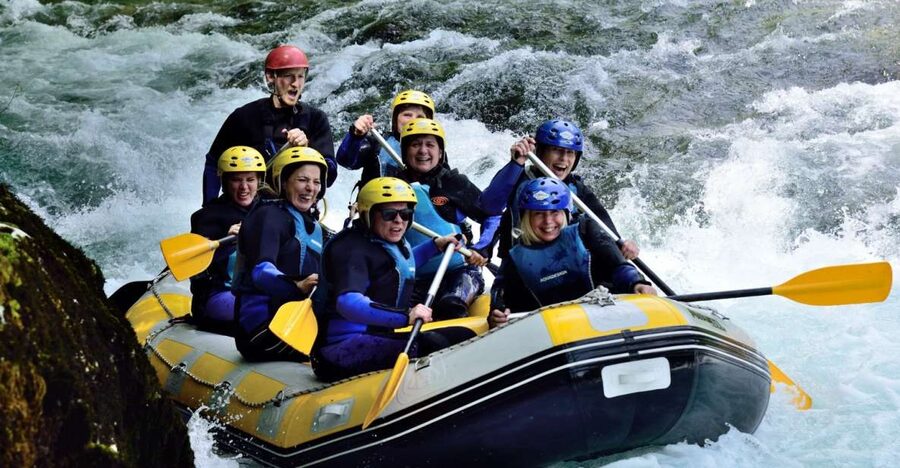
Cold water, warm neoprene, real rapids. This Kupa River trip gives you a proper whitewater outing without requiring previous paddling skills, and the upper river runs close to its source, only about 15 kilometers downstream. I like the mix of supervised rapids and peaceful mountain scenery, and I also like that children from age six can join when they are ready for the activity. The main catch is seasonal: summer water can be low, which often means inflatable kayaks instead of a larger raft.
The tour costs $63 per person and lasts about four hours, including transfers from the base. That is fair value for the equipment, licensed guide, river transport, return ride, and roughly two and a half hours on the water. You should still bring food, drinks, a towel, swimwear, water shoes, and a passport or international identity card, since the route may cross into Slovenia.
Five things to know before paddling the Kupa
- The river section is near the source: You cover about 7 to 10 kilometers on the upper Kupa, where the water is clear and the setting feels wild rather than developed.
- Spring and autumn bring stronger water: Rain in the Gorski Kotar highlands can raise the river quickly, creating a livelier whitewater run.
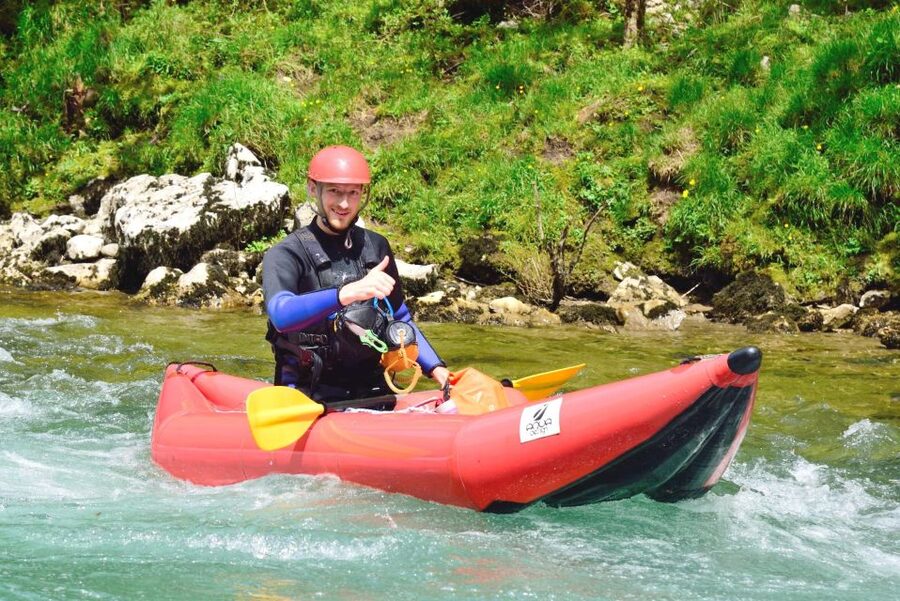
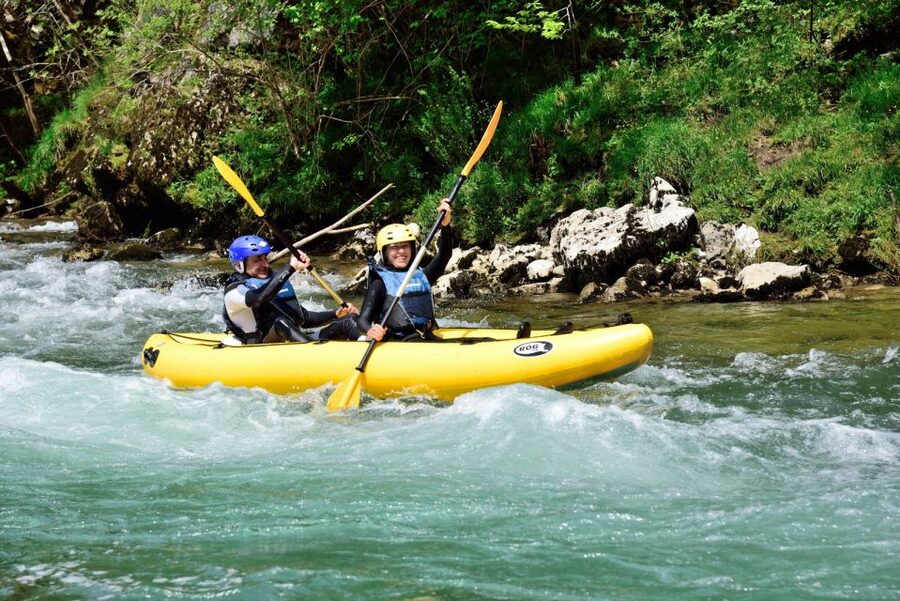
- Summer often means inflatable kayaks: Low water may require two or three people per kayak, rather than a four to seven-person raft.
- Children can join from age six: The guides control the boats and give instructions, but this is still an active river trip, not a sightseeing cruise.
- A photographer follows the action: Pictures are taken at selected rapids and sent later by email, but they cost extra.
- Bring identification: The route can cross the Croatian-Slovenian border, so every person, including each child, needs a passport or international ID card.
Why the upper Kupa River is worth your time
The Kupa begins in the Croatian highlands, and this outing uses a section close to the source. That matters because the river feels fresh and energetic here. You are not simply floating through a broad, slow channel. You get short rapids, clear water, rocky banks, and a sense of being far from a city, even though Zagreb, Ljubljana, and Rijeka are all within practical reach.
The location is listed in Zagreb County, but the meeting point is near the Slovenian border, about 15 minutes from Delnice and close to the motorway. Driving times are roughly one and a half hours from Zagreb, one and a half hours from Ljubljana, and one hour from Rijeka. Check your navigation carefully. The operator has several locations, and entering the wrong one could make the beginning of your day needlessly tense.
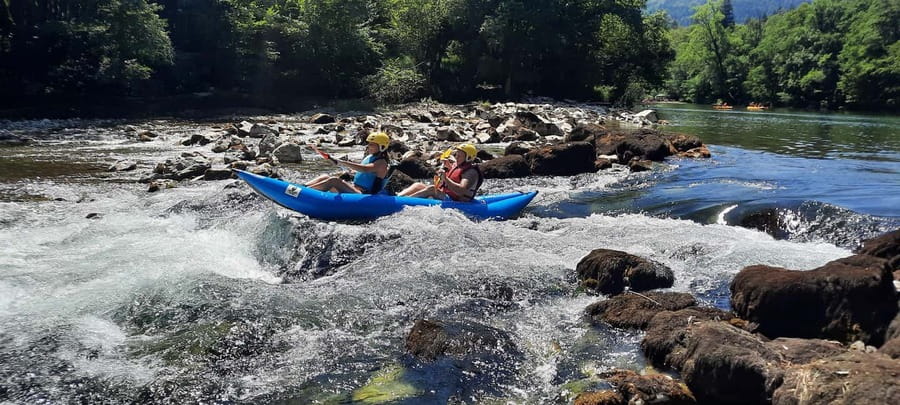
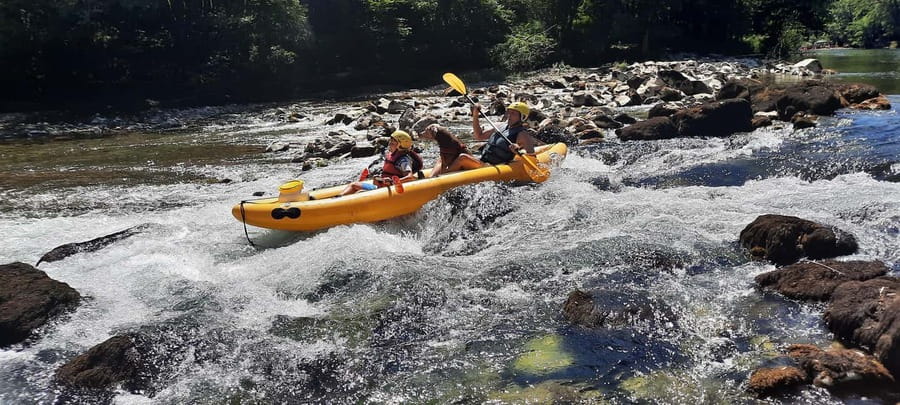
The water level is the key to understanding this tour. In spring and autumn, rain in Gorski Kotar can make the Kupa rise. That usually creates a more active rafting experience, with stronger current and more pronounced rapids. In summer, the river is often lower, so the same upper section may be run in inflatable kayaks holding two or three people.
That seasonal change is not a small detail. If you picture yourself in a large raft with a guide and several companions, summer may not match that image. One summer outing was completed in kayaks because the water was too shallow for riverboats. Kayaks can feel more hands-on and nimble, but they also put more responsibility on the paddlers to follow instructions and work together.
More River Kayak Tours in Croatia
- Zrmanja River: Half-Day Guided Kayaking Tour Near Zadar
★ 4.8 · 1,817 reviews - Kayaking on Upper Mreznica River – Slunj, Croatia
★ 5.0 · 178 reviews - Zadar: Zrmanja River Kayaking, with optional transfer from Zadar
★ 4.5 · 166 reviews
Reaching the river from the base
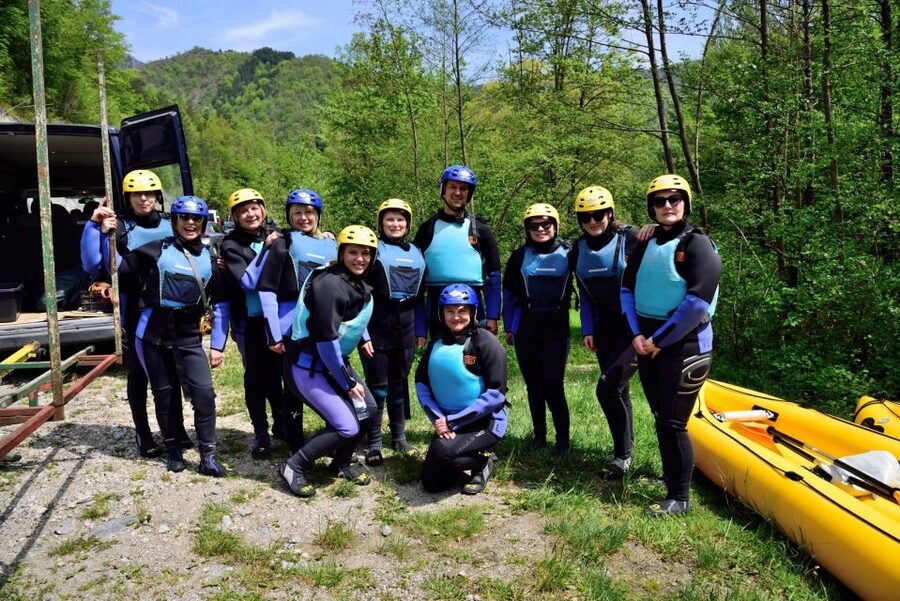
Your day starts at Rafting Croatia, Kupa Sports. From there, a van ride of about 15 minutes takes you to the river launch point. The transfer is included, which is useful because the start and finish are not simply two ends of a walk from the base.
At the launch area, you receive a safety briefing lasting about 10 minutes. You are shown how to paddle, how to respond to the guide, and how to handle the river section ahead. This instruction is especially important for first-time rafters and families. The rapids range from about 15 to 300 meters in length, and some feel intense even though they are described as safe for beginners.
Allow extra patience before the boat reaches the water. One summer account found the preparation period somewhat long, though still acceptable. The waiting can feel less appealing if you arrive eager to start, but the briefing and equipment process are part of what makes the trip suitable for beginners. The guides need to place people in the right craft, fit the gear, and explain the river commands.
The practical tip is simple: arrive early, know the exact base location, and do not count on a rushed check-in. One participant called 15 minutes ahead after running late and still had a difficult arrival with an instructor. Even if your delay is understandable, arriving on time is the safest way to begin this kind of activity on good terms.
Choosing between a raft and an inflatable kayak
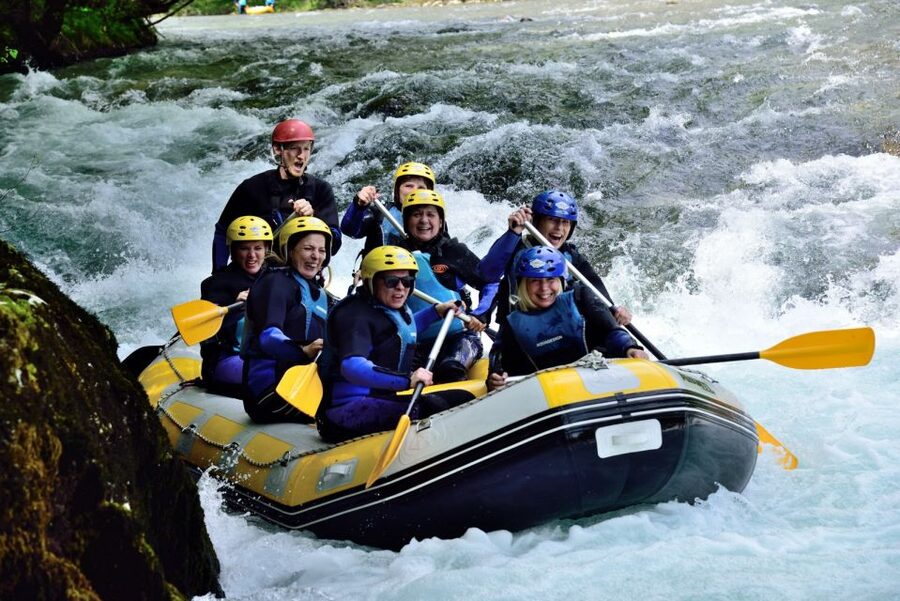
The operator uses rafts for four to seven people, with a guide in each raft. When the river is low, the group may use mini rafts or kayaks for two or three people. The choice depends mainly on water conditions and the season, not on a menu of boats you select at booking.
A raft spreads the work among several paddlers. You still need to listen and paddle when told, but the guide controls the boat and helps the group pass each rapid. This is the more forgiving setup for families, mixed-age groups, and people who want the social side of rafting.
An inflatable kayak gives you a closer feel for the current. It is smaller and more responsive, but space is limited. If you are booking with a group, ask ahead about the likely boat type for your date, especially for a summer trip. The activity description explains the seasonal pattern, but the exact water level can change after rain.
The guides are the central safety feature. The entire route is controlled by professional guides, and each raft has its own guide. That makes the experience accessible to beginners, yet you should not confuse beginner-friendly with effortless. You still need to paddle, stay alert, and follow directions quickly when approaching a rapid.
Two and a half hours among rapids and clear water
Once underway, you cover about 7 to 10 kilometers. The river includes several rapids, some short and some extending up to 300 meters. A few provide a genuine rush, but the route is designed so beginners can pass them safely with the guide’s help.
I like this balance. You get enough moving water to make the outing feel like an adventure, but the trip is not presented as an expert-only challenge. The guide can explain what to do before each difficult section, and the group works through the rapid together.
The Kupa’s color and purity are a major part of the appeal. The river runs through attractive highland scenery, with rocky sections and steep banks around the water. The setting is particularly impressive because this is the upper river, close to its source. You are seeing the Kupa in a more natural form before it grows wider and slower downstream.
The water temperature deserves respect. A September outing began in air temperatures of about 14 degrees Celsius, but the provided neoprene suits kept the cold out well. You should still bring swimwear and a towel, since the suit goes over your clothing and the trip includes water activities. Your own wettable water shoes or sneakers are allowed, and they are a better choice than ordinary sandals.
Same water, a different day out on it:
- Dubrovnik: Sea Kayaking&Snorkelling Guided Day/Sunset Tours
★ 4.9 · 2,869 reviews - Dubrovnik: Sea Kayaking & Snorkeling Tour
★ 5.0 · 1,646 reviews - Split: Illuminated Evening Guided Kayaking Tour
★ 4.8 · 1,622 reviews - X-Adventure Sea Kayaking Half Day Tour in Dubrovnik
★ 5.0 · 1,316 reviews
The break: swimming, cliff jumping, and photographs
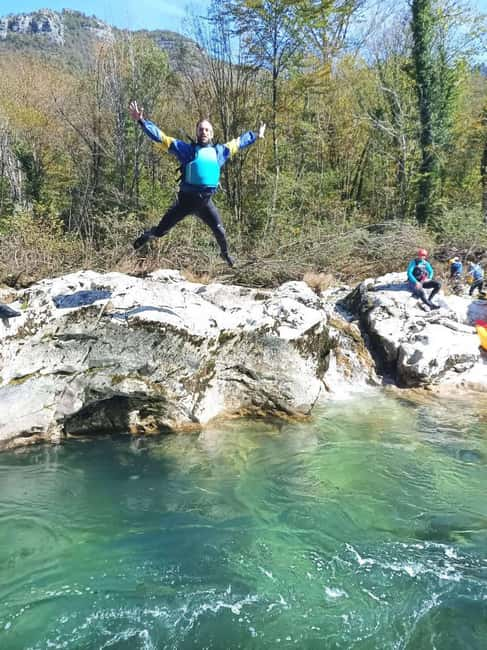
The group stops at a selected point for about 20 minutes. This is more than a pause to stretch your legs. You may have time for swimming in the rapid and cliff jumping, depending on the conditions and the guide’s directions.
Cliff jumping adds a playful edge, but it is optional in spirit and should be treated seriously. The river level changes after rain, and conditions at the chosen stop can vary. Listen to the guide before entering the water or jumping. If you would rather not jump, the swimming and riverside break still give you a chance to enjoy the setting without another burst of adrenaline.
A photographer follows the group and takes pictures at some of the more interesting rapids. The images are sent later by email, but they are not included in the $63 price. That arrangement lets you focus on paddling instead of trying to protect a phone near moving water. If you want the photos, budget for an additional charge.
The photograph service is useful for families and groups, especially when everyone is in the boat and nobody can stand safely on shore to take pictures. It is less useful if you are determined to keep the total cost fixed, so ask about the price before deciding.
Returning to base and changing into dry clothes
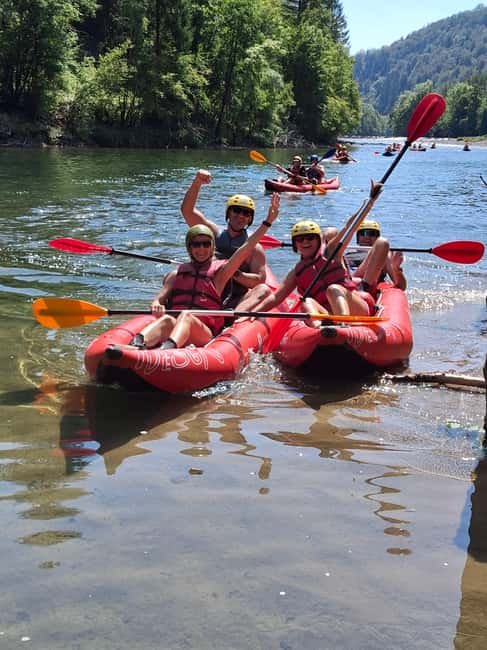
After the river section, you reach the finish point and change into dry clothing. A van then takes you back to the Kupa Sports base in about 10 minutes. The return transfer is included, so you do not need to arrange a second car or leave one at the river’s end.
The official activity length is four hours. The listed schedule includes 15 minutes in the first van, 10 minutes for the safety briefing, about two and a half hours on the river, a 20-minute break, and the return ride. Preparation and equipment changes fill out the remaining time.
Do not plan a tightly timed afternoon immediately afterward. River conditions, group preparation, and the pace of the outing can affect the exact finish. Bring your own snacks and drinks because food is not included. There is no need to treat this as a full-day commitment, but it deserves a relaxed half-day schedule.
Is $63 a good price?
At $63, the cost is reasonable for a guided four-hour activity. You receive river transport in both directions, a licensed guide, the necessary equipment, safety instruction, and the guided river run. For a first-time paddler, the guide and supplied gear are the most valuable parts of the package.
You pay separately for food, drinks, and photographs. Those exclusions are normal for a short outdoor activity, but they affect your final budget. You also need to supply basic personal items, including water shoes, swimwear, a towel, and identification.
The value is strongest if you are already near Delnice or making a road trip between Croatia and Slovenia. The access from Zagreb, Ljubljana, and Rijeka makes the outing practical as a half-day addition to a larger trip. If you are coming only for the river, remember that the base is not in the center of Zagreb. The correct meeting point is near the border and close to the motorway.
The tour has an overall rating of 4.4 from 21 bookings, which fits the experience described here: strong marks for the guides, scenery, and safe handling, with a few practical complaints about low summer water, preparation time, and one poor interaction over late arrival.
Who should book this Kupa trip?
I would recommend it to families with children aged six and older, couples, groups of friends, and first-time rafters who want real rapids without an advanced technical challenge. The guide-led format makes it approachable, and the chance to swim and jump at the break gives the outing more variety than a nonstop paddle.
It is also a good fit if you care about scenery as much as speed. The upper Kupa is attractive, clear, and close to its source, so the river setting is not an afterthought.
You may want another activity if you need step-free access or have a mobility impairment. The operator does not list the trip as suitable for people with mobility impairments. Children under five are not accepted, while children from age six are welcome.
The biggest question is the water level. Spring and autumn are likely to provide the liveliest rafting conditions, especially after rain. Summer can still be enjoyable, but expect inflatable kayaks more often and understand that low water may cause the boat to touch the riverbed in places. One September outing had such a low level that two people shared a boat and occasionally scraped bottom, though the guide helped them manage the tricky spots.
Should you book the Kupa River adventure?
Book it if you want a supervised, scenic introduction to Croatian whitewater and you can accept that the boat type depends on the season. The strongest reasons are the upper Kupa setting, professional guidance, beginner-friendly rapids, and the easy half-day format from Zagreb, Ljubljana, or Rijeka.
Before paying, confirm the meeting point and ask what craft is likely for your date. Pack your passport or international ID card, even if you expect to stay on the Croatian side, and arrive on time. If you want a more active summer experience, be ready for a two or three-person inflatable kayak rather than a big raft.
This is not the best pick for a quiet river float or a luxury outdoor outing. It is a practical, moderately priced adventure with cold water, changing conditions, and enough current to keep you paying attention. For families and beginners who want a real taste of whitewater, that is exactly the point.
FAQ
How long does the Kupa River rafting trip last?
The activity lasts about four hours, including the van transfers, safety briefing, river activity, break, and return to the base.
How far is the river from Zagreb?
The meeting point is about one and a half hours from Zagreb. It is near the Slovenian border, about 15 minutes from Delnice and close to the motorway.
Can children join the tour?
Children from age six are welcome. Children under five are not suitable for this activity, and every child must bring a passport or international ID card.
Do I need previous rafting or kayaking experience?
No. Beginners can participate, and the guides provide instruction and training before the trip. The rapids are described as safe for beginners when handled under guide supervision.
Will the trip use a raft or a kayak?
The craft depends on water level and season. The operator generally uses rafts for four to seven people, while low water can mean mini rafts or inflatable kayaks for two or three people. Summer trips often use kayaks because the river is shallower.
What should I bring?
Bring a passport or international ID card, towel, food and drinks, swimwear, and water shoes. You may also bring your own wettable sneakers. Neoprene equipment and the other necessary river gear are supplied.
Does the tour cross into Slovenia?
It can. Because the route may cross the Croatian-Slovenian border, every participant should carry a passport or international ID card.
Just added around Croatia
- Supetar-Postira kayaking★ 5.0 · 26 reviews
- Sea kayaking Postira – Lovrečina (St.Lovre, archaeological site)★ 5.0 · 16 reviews
- Sunset Kayaking★ 5.0 · 50 reviews
- Split Sunset Stand Up Paddle Tour★ 5.0 · 16 reviews
- Split: Guided Sunset Sea Kayaking & Snorkeling Tour★ 4.8 · 185 reviews
- Split: Sunset Guided Kayaking Tour★ 4.8 · 71 reviews
- Stand Up Paddle Tour in Split★ 4.7 · 17 reviews
- Split: Transparent SUP night Glow tour★ 4.9 · 73 reviews
River Kayaking, side by side.
Crystal River Three Sisters Springs and Manatee Clear Kayak Tours
Read our review →
Wailua River & Waterfalls Kayak Tour: Expert-Guided Adventure
Read our review →
Wailua River Kayak and Sacred Falls Guided Hike with Lunch
Read our review →
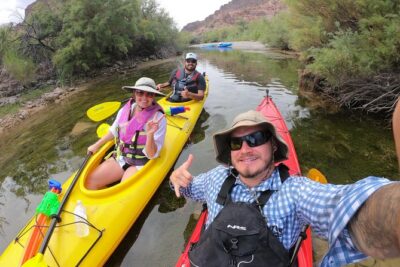
Small-Group Emerald Cave Kayak Tour on Colorado River
Read our review →This trip also sits in