REVIEW · NIGHT AND BIOLUMINESCENT KAYAKING
Bioluminescence Kayak Tour – Est. 1994
The sea can put on a light show. This two-hour evening kayak trip takes you from Auckland’s North Shore into the protected waters of the Long Bay-Okura Marine Reserve, where tiny ocean organisms may flash blue around your paddle strokes. I like the small 1:6 guide-to-guest ratio, and I like that first-time kayakers receive full instruction rather than being expected to arrive with skills. The main catch is simple: the glow is natural and variable, so it may be subtle rather than as bright as photographs suggest.
The setting adds plenty even when the plankton are shy. You paddle beneath stars, listen to the Hauraki Gulf and native birds, and may see the water sparkle when you move it. Guides such as Gareth, Madison, Eloise, Peter, Ben, Sam, Josh, Elena, Keith, and Maddy have been praised for calm safety advice and an easygoing manner. You should still bring patience, accept that you may get wet, and leave room in your plans in case weather affects the date.
Five things to know before you book
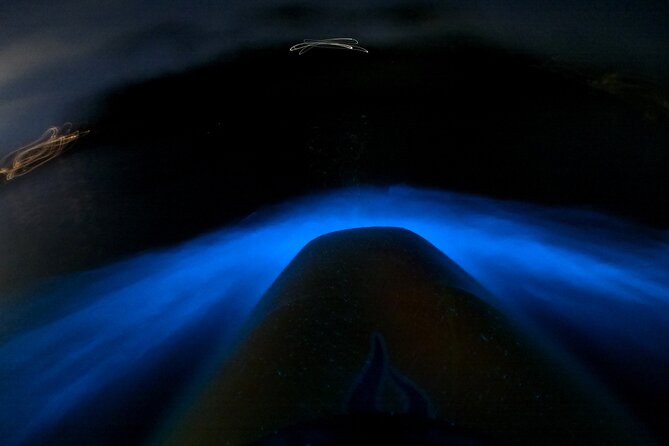
- The glow appears when the water moves: Paddle strokes, splashes, and waves can trigger brief blue flashes from bioluminescent plankton.
- Beginners are welcome: Qualified guides provide kayaking tuition, and stable sea kayaks or sit-on-top kayaks are used.
- The trip takes place near Auckland: The exact launch area is within 6 miles, or 10 kilometers, of the North Shore Canoe & Kayak Store in Mairangi Bay and is confirmed before 3:30pm on the tour day.
- Night photography is difficult: Phone cameras may not capture the faint glow, so treat the experience as something to watch rather than photograph.
- Weather matters: Poor conditions can lead to a new date or a full refund, and you can cancel for a full refund up to 24 hours before departure.
Why Auckland’s night water is worth your evening
Auckland has plenty of urban lights, traffic, and evening activity. This trip gives you a reason to leave the city center after dark and spend two quiet hours on the coast instead. The attraction is not a staged performance. It is a natural reaction from microscopic marine life, and that makes the experience unpredictable in a good way.
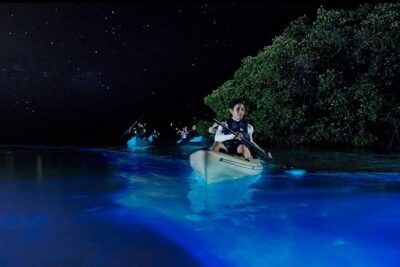
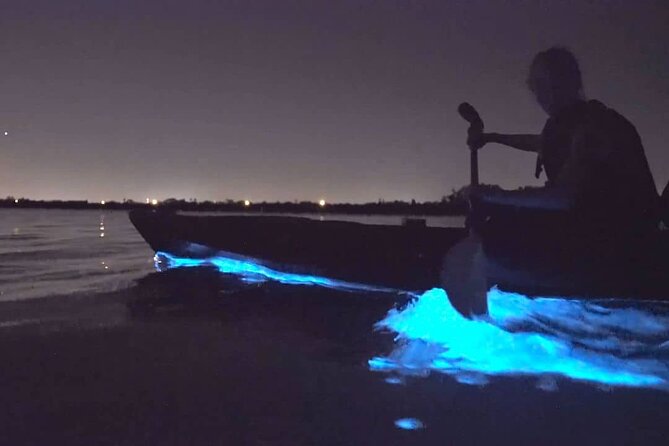
When conditions line up, the plankton can look like tiny stars beneath your kayak. A paddle stroke may leave a brief blue trail, or a small wave may flicker around the boat. The effect can be gentle, not a constant neon glow. That distinction matters because promotional photographs often make bioluminescence look stronger than it appears to the human eye.
I like the combination of silence and movement. You are not simply sitting beside the water waiting for something to happen. You are making small ripples and watching to see if they light up. That gives the outing a playful quality, and several guides encourage people to make the most of each patch of glowing water.
The surrounding night sky can be part of the reward. Clear evenings have brought views of stars and planets, creating a memorable contrast between light above and light below. Even when the plankton are limited, the protected coastal setting and night paddle can still make the outing worthwhile.
More Night Kayak Tours in New Zealand
- Auckland: Night Kayak Tour in Glowing Bioluminescent Waters
★ 4.9 · 259 reviews - Auckland: Bioluminescence Kayak Tour with Guide
★ 4.4 · 42 reviews - Auckland Bioluminescence Kayak Tour
★ 5.0 · 31 reviews
From Rosedale to the launch area
The listed meeting point is 2/20 Ascension Place, Rosedale, Auckland 0632. The activity ends back at the meeting point, and the operating area is kept within a 6-mile radius of the North Shore Canoe & Kayak Store in Mairangi Bay. The precise kayaking location is confirmed before 3:30pm on the day of the tour.
That last-minute confirmation is practical rather than mysterious. Tides, weather, water conditions, and the best chance of seeing bioluminescence can affect the choice of launch point. You should check your messages on the day and avoid assuming that every departure uses exactly the same beach.
Public transport is available near the meeting area. One participant reached the start by Auckland bus and used an Uber afterward, while others found it easy to arrange an Uber back toward central Auckland. Since this is an evening activity, I would plan your return ride before you set out, especially if you are not staying on the North Shore.
The trip has a maximum of 24 people, but the important figure is the guide ratio. At one guide for every six participants, the group can be split into manageable pods on the water. That helps a first-time kayaker get help with steering, paddling, and boat position without having to shout across a large crowd.
The first paddle: learning without pressure
You do not need previous kayaking experience. The guides provide tuition and safety instruction, then use stable sea kayaks or sit-on-top kayaks suited to beginners. That makes this a reasonable choice if you are curious about kayaking but do not want to commit to a demanding lesson in rough water.
The first part of the outing usually helps you get used to the boat, paddle, and rhythm of moving as a group. You may feel awkward for the first few strokes. That is normal, and the guides have been praised for being patient with nervous participants and for making safety their first concern.
One practical point: a reviewer with back trouble specifically advised looking for a kayak with a backrest. The available boats may vary, so if back support matters to you, raise the issue with the guide before setting off. Another useful warning is that getting out of the kayak can be harder than getting in, particularly for a first-timer.
Wear clothing that can handle splashes. One participant was caught in a short rain shower and still rated the trip highly, while another advised bringing a change of clothes. Jeans are not suitable for this activity, and a guide once supplied extra clothing to a participant who arrived in them. The supplied kayaking and safety equipment is included, but you remain responsible for dressing sensibly.
Long Bay-Okura Marine Reserve after sunset
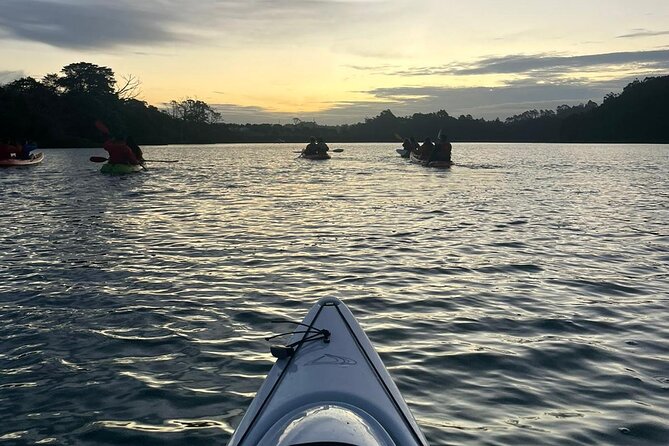
The featured paddle takes place in the protected waters of the Long Bay-Okura Marine Reserve. The reserve setting gives the outing more substance than a quick trip around a marina. You are out among coastal water, native bird sounds, and dark shorelines rather than surrounded by city glare.
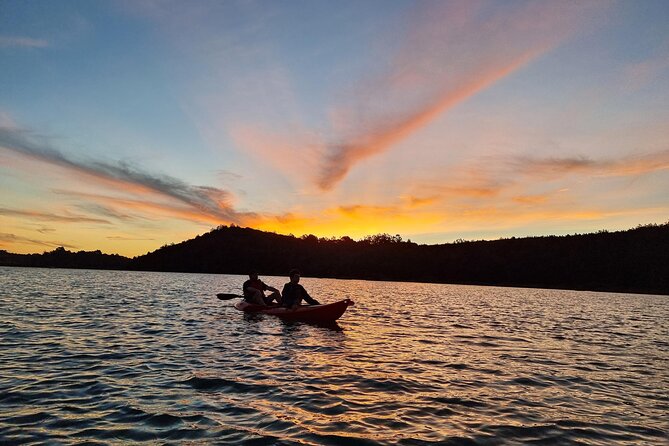
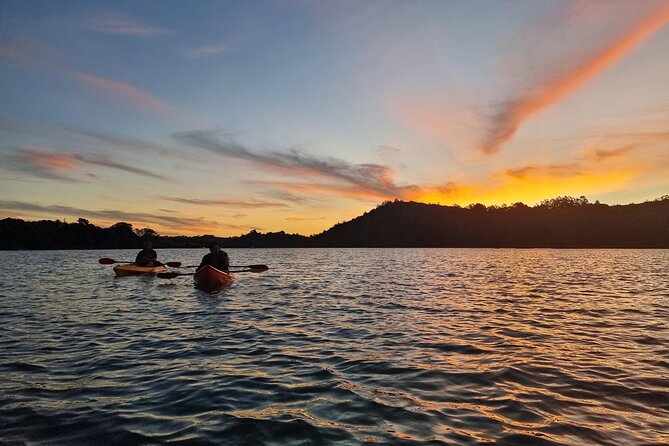
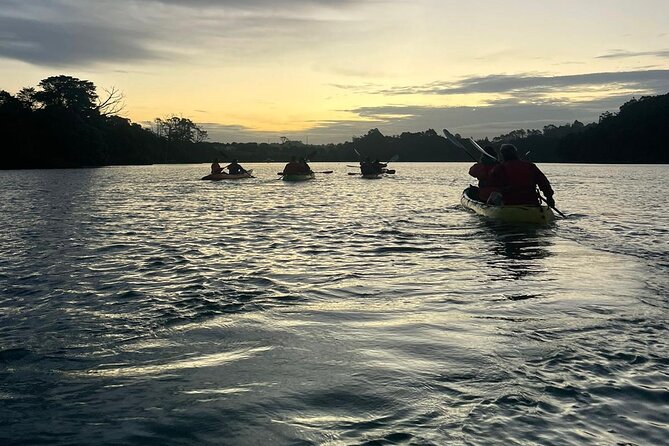
The route begins around sunset and continues into darkness. This timing helps you get comfortable on the water before the light fades completely. As evening settles, the character of the paddle changes. Familiar details disappear, and the sounds of the gulf become more noticeable.
You should not expect a long sightseeing route packed with landmarks. The point is the water, the quiet, and the possibility of seeing light in the wake of your paddle. In darkness, even a small flash can feel remarkable. The guides also explain the science behind different kinds of bioluminescence and may point out areas where the effect is strongest.
The protected setting does not guarantee a flat or dry evening. Weather can change, and the operator may cancel if conditions are poor. That is a sensible safety rule for a night sea activity. If the trip is canceled for weather or because the minimum number of participants is not reached, you are offered another date or a full refund.
More Night Kayak Tours in Auckland:
- Auckland City Lights Night Kayaking Tour
★ 5.0 · 21 reviews - Auckland: City Lights Night Kayak Tour
★ 5.0 · 11 reviews - Night Kayak – Condado City Lights Tour
★ 4.5 · 4,807 reviews - Phuket: Phang Nga Bay Bioluminescent Plankton and Sea Canoes
★ 4.8 · 2,321 reviews
What the bioluminescence really looks like
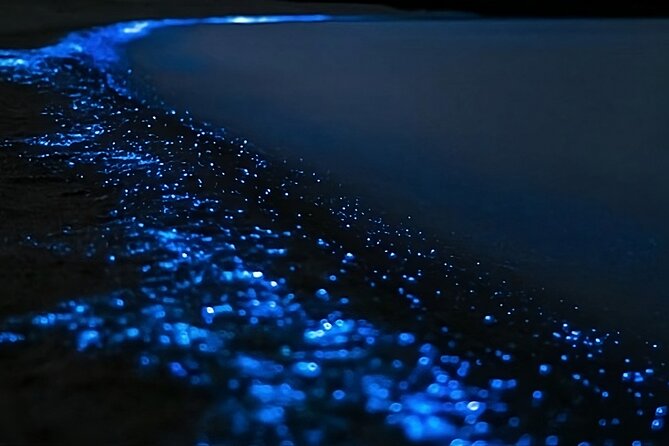
The most important expectation to set is that the glow varies. Some nights bring plenty of visible blue light, with paddle strokes creating flashes like underwater sparks. Other nights produce only brief, faint moments. The difference can depend on weather, water conditions, darkness, and the amount of plankton present.
The glow is usually triggered by movement. You may see blue specks around the paddle, a glowing line behind a stroke, or brief flashes in small waves. It does not simply shine constantly without being disturbed. That is why the trip feels interactive, but also why a still camera may struggle to record it.
Several people have described the effect as stars under the water, a galaxy below the kayak, or sparks around the paddle. Those comparisons are useful as long as you keep them in perspective. The experience can be magical, but it is not a guaranteed wall of bright blue light.
Phone photos and videos are especially unreliable from a moving kayak at night. The glow may be too faint for a phone sensor, and any movement can blur the image. I would treat photographs as a bonus. Your best memory may be the moment you stir the water and see a quick flash that your camera never records.
The guides make the difference
This experience depends heavily on the guides. The people named in feedback include Gareth, Madison, Eloise, Paul, Peter, Ben, Sam, Josh, Elena, Keith, and Maddy. Their repeated strengths are friendliness, patience, clear safety instruction, and enthusiasm for the natural phenomenon.
Eloise was praised for giving practical tips and explaining kayaking clearly. Peter and Ben helped make the glowing water feel playful. Gareth and Madison were described as energetic and engaging, while Sam helped a participant who arrived in unsuitable clothing. Josh and Elena were noted for showing different areas of bioluminescence without making the outing feel rushed.
That enthusiasm matters at night. Darkness can make a beginner feel uncertain, especially when the group spreads out on the water. A guide who keeps the mood light while watching safety helps you relax and pay attention to the surroundings.
The 1:6 ratio also gives the guides a fair chance to monitor the group. With a maximum of 24 people, the outing can still feel social, but it should not have the impersonal feel of a large boat excursion. If you prefer complete solitude, this is not a private paddle. If you want support without being part of a crowd, the group structure is a good compromise.
Is the $73.85 price fair?
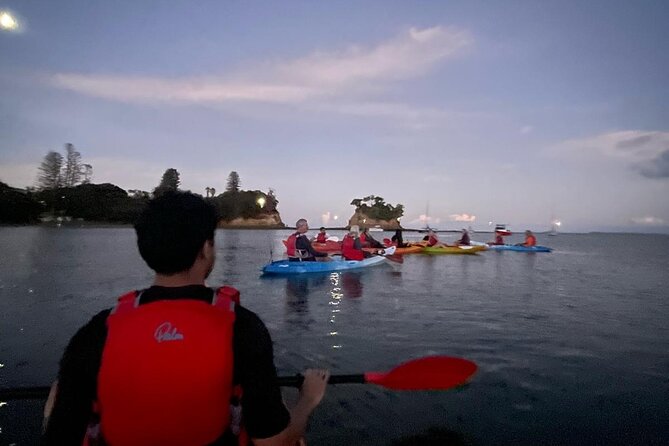
At $73.85 per person, the price includes the kayak, paddle, safety gear, instruction, and roughly two hours on the water. It also covers the value of a qualified guide who manages a night activity in changing coastal conditions.
I see this as fair value for a first-time kayaker who wants a special evening rather than a basic equipment rental. You are paying for instruction, group supervision, and access to a natural sight that is difficult to arrange on your own. The small guide ratio strengthens the value.
The calculation changes if your only goal is a guaranteed, bright bioluminescent display. No operator can control the plankton, and some outings produce a subtle glow. If the water barely lights up, you are still receiving a night kayak trip in a protected coastal area, but the price may feel high if you booked solely for dramatic photographs.
The overall rating is 4.2 from 187 reviews, which fits the experience well. Most of the strongest praise focuses on the guides, calm water, beginner-friendly equipment, and the wonder of seeing blue flashes. The lower scores are usually tied to weak bioluminescence, poor photo results, or communication that could have been clearer before the tour.
Who will enjoy this most?
I would recommend this for:
- First-time kayakers who want instruction and stable equipment
- Couples looking for a quiet evening activity
- Families whose members can participate in a two-hour paddle
- Auckland visitors with an evening free on the North Shore
- Anyone interested in marine science and natural night phenomena
- People willing to enjoy the moment without needing a perfect photograph
You should think twice if you dislike getting wet, have serious back concerns, or need a guaranteed visual spectacle. You should also be comfortable with the outing being weather-dependent. This is a gentle adventure, but it is still kayaking on the ocean at night.
The activity is listed as suitable for most participants, with no previous experience required. The available information does not specify an age limit, so families should confirm any age-related details before booking.
Booking, weather, and small practical choices
You can cancel for a full refund if you do so at least 24 hours before the start time. Changes or cancellations inside that window are not accepted for a refund. The operator may also move or cancel the outing for poor weather or an insufficient number of participants, offering another date or a full refund.
I would keep the rest of your evening flexible. The launch area is confirmed on the day, and weather can affect the plan. Check the final message before leaving for the meeting point, and arrange your return transport ahead of time if you are heading back to central Auckland.
Wear clothes that dry reasonably quickly and bring a change of clothes. Avoid jeans, and ask about back support before you launch if that is important to you. Keep your expectations realistic about photographs, then give your attention to the water itself.
Should you book the bioluminescence kayak tour?
Book it if you want a friendly, beginner-level night paddle with a real chance of seeing blue sparks in the water. The guides, small ratio, stable kayaks, and protected coastal setting make this more than a simple equipment rental.
Do not book it expecting the sea to glow brightly on demand. The natural light can be faint, short-lived, or spectacular, depending on the night. I think the trip offers good value when you see it as two experiences together: a peaceful Auckland coastal paddle and a chance to witness one of the ocean’s strangest small-scale wonders.
FAQ
Where does the tour meet?
The listed meeting point is 2/20 Ascension Place, Rosedale, Auckland 0632, New Zealand.
Where does the kayaking take place?
The activity takes place within 6 miles, or 10 kilometers, of the North Shore Canoe & Kayak Store in Mairangi Bay. The exact location is confirmed before 3:30pm on the tour day.
How long does the experience last?
The kayaking experience lasts approximately two hours.
Do I need previous kayaking experience?
No. Guides provide kayaking tuition, and the tour is designed to accommodate people with no prior experience.
What equipment is included?
All kayaking and safety equipment is included. The operator uses stable sea kayaks or sit-on-top kayaks.
How large is the group?
The maximum group size is 24 people. The guide-to-guest ratio is one guide for every six participants.
Can I cancel for a full refund?
Yes. You can cancel at least 24 hours before the experience start time for a full refund. Cancellations made less than 24 hours before departure are not refunded.
What happens if bad weather cancels the tour?
If poor weather causes cancellation, you are offered a different date or a full refund. The same options apply if the minimum number of participants is not reached.
Just added around Auckland
- Motukorea / Browns Island Sea Kayak Journey★ 5.0 · 35 reviews
- Browns Island Motukorea Sea Kayak Tour★ 5.0 · 9 reviews
- Auckland City Lights Night Kayaking Tour★ 5.0 · 21 reviews
- Auckland Bioluminescence Kayak Tour★ 5.0 · 31 reviews
- Rangitoto Island: Sea Kayak & Summit Hike Day Trip★ 4.8 · 31 reviews
- Auckland: Browns Island (Motukorea) Sea Kayak Tour★ 5.0 · 22 reviews
- Auckland: City Lights Night Kayak Tour★ 5.0 · 11 reviews
- Auckland: Bioluminescence Kayak Tour with Guide★ 4.4 · 42 reviews
Night and Bioluminescent Kayaking, side by side.
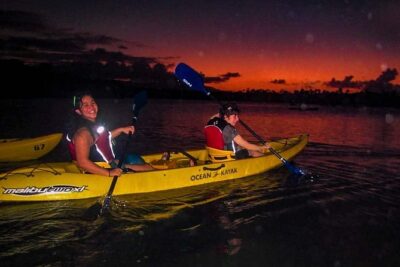
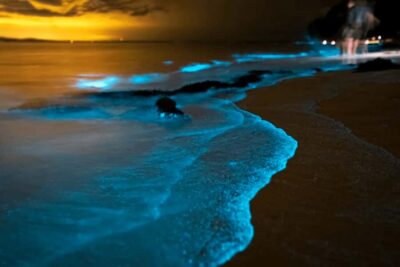
Phang Nga Bay Bioluminescent Plankton and Sea Canoes
Read our review →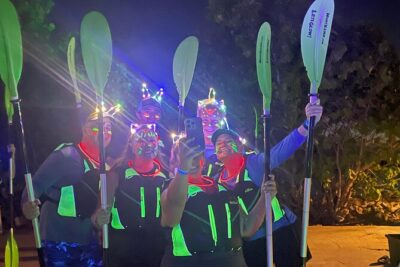
Night Kayak Tour St. Thomas – Westin Frenchman’s Reef
Read our review →