REVIEW · NIGHT AND BIOLUMINESCENT KAYAKING
Florida Bioluminescence Kayaking Tour (Titusville)
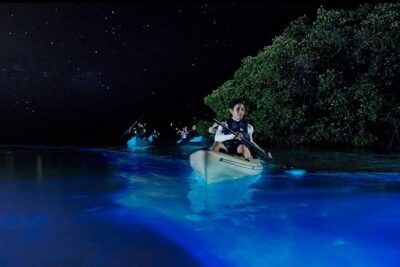
The water lights up with every paddle stroke. This 90-minute Florida bioluminescence kayak tour takes you onto the Indian River Lagoon or Banana River near Titusville, where tiny glowing organisms can turn the water electric blue. I like the easy beginner-friendly pace and the chance to see fish, comb jellies, stars, and other night wildlife from a kayak. The main catch is simple: nature sets the schedule, and bright moonlight, cold weather, or poor conditions can make the glow faint.
I also like that the $65 price includes your kayak, paddle, personal flotation device, and guide. Guides such as Brian, Terrance, Jeremiah, Clint, and Kate have been praised for patient instruction, local nature knowledge, and careful safety work. Bring bug spray, expect wet feet, and know that the strongest bioluminescence usually appears from July through October.
Key points to know before you book
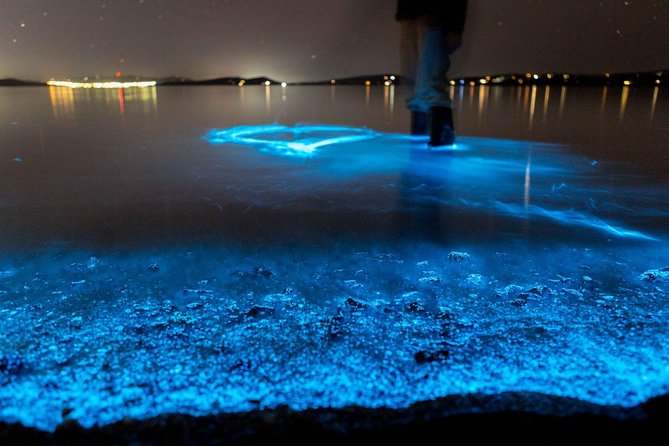
- The glow comes from tiny water organisms: Your paddle, fingers, fish, and comb jellies may leave blue trails in the dark.
- It is a gentle 90-minute outing: Beginners and children age five and older can take part, with guides nearby throughout.
- July through October offers the best odds: Some glowing activity can appear as late as January, but it varies with conditions.
- Haulover Canal is the main Titusville launch: Some departures use Kiwanis Island Park on Merritt Island.
- Bug spray is essential: Mosquitoes can be rough, especially while you wait on shore or float quietly.
- The $65 fee covers the basics: Kayak, PFD, paddles, and guide service are included, but towels, drinks, snacks, and repellent are not.
Why this night paddle feels different
A daytime kayak trip gives you open views, birds, and sun on the water. This one asks you to watch the water itself. Each paddle stroke may stir a brief blue spark, and a fish passing underneath can look like a moving line of light.
That effect comes from tiny organisms in the water. The display is not a steady neon glow, and photos can make it look stronger than it feels in person. You see it in flashes, trails, and small bursts. The best part is often dipping your hand into the water and watching your fingers leave a faint blue shimmer.
Several guides also use a small net to show comb jellies up close. These delicate animals can glow when touched, giving you a second kind of light show. A guide named Jeremiah has been praised for catching a blue crab and showing glowing comb jellies to the group. The animals are released afterward.
You may also see fish moving below the kayak. Reports include manatees, dolphins, an alligator, and night birds, but none of these sightings is promised. The stars can be excellent, too, since you are away from much of the bright city lighting. One evening on the water may offer more sky than bioluminescence, and that can still be a lovely part of the trip.
More Night Kayak Tours in Cocoa Beach
- Bioluminescence Kayak Tour
★ 5.0 · 831 reviews - Bioluminescence Night Kayaking Tour of Merritt Island Wildlife Refuge
★ 4.5 · 605 reviews - Bioluminescent Clear Kayak Tours in Titusville
★ 5.0 · 321 reviews
Starting at Haulover Canal in Titusville
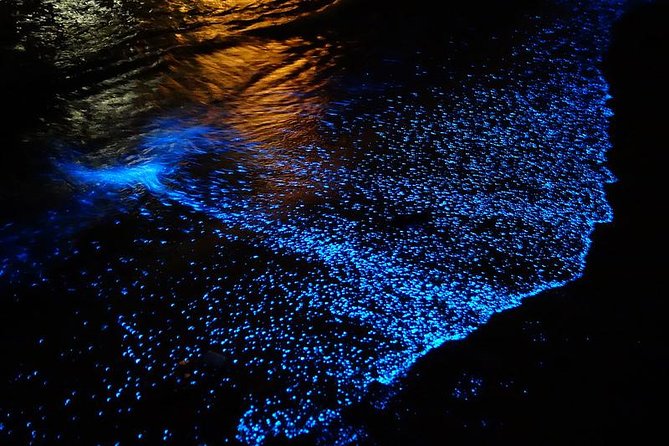
The main meeting point is Haulover Canal Kayak Launch at Haulover Canal, Mims, Florida 32754. The launch is described as easy to find, and the tour returns to the same place at the end.
The canal area matters because you are not simply being pushed into a kayak and sent off in the dark. The guides give an instruction lesson before departure, help you choose a single or tandem kayak, and explain how the group will move. That short briefing is useful if you have never kayaked at night.
The listed launch sites also include Kiwanis Island Park on Merritt Island. Your confirmed meeting point should be checked carefully before setting out, since the experience can operate from different areas around the Indian River Lagoon and Banana River.
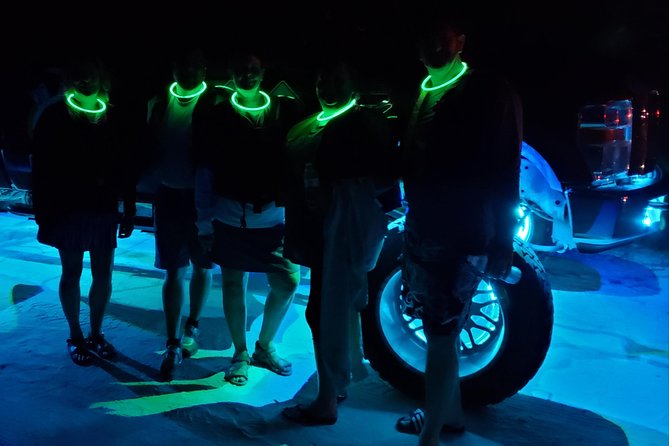
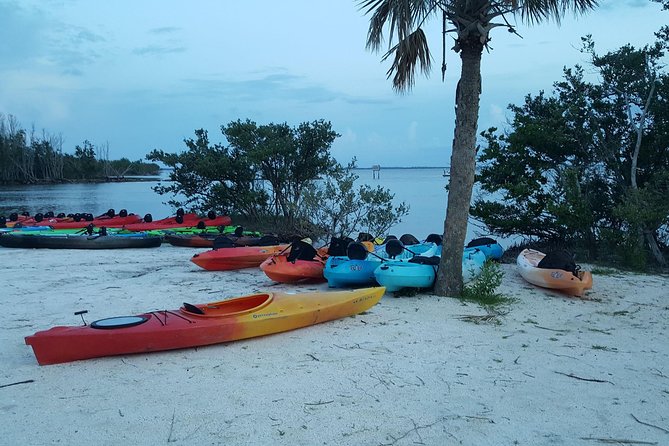
At the launch, expect some waiting, preparation, and wet gear. This is not a dry ride. Water can reach your feet and lower legs, and you should bring a towel for the end. Aquatic footwear is a better choice than flip-flops because you may need secure footing around the launch area.
Choosing a single or tandem kayak
You can use a one-person kayak or share a two-person kayak. The maximum weight is 300 pounds for a single kayak and 600 pounds for a tandem.
If you are new to kayaking, a tandem can feel easier because two people share the paddling. It can also require a little cooperation. The front and back paddlers need to settle into a common rhythm, especially when the group turns or stops.
A single kayak gives you more control and independence. It can also require more effort if you are not used to paddling. Most people can participate, and the tour is described as suitable for beginners, but you should be comfortable sitting in a kayak and following basic instructions.
One important practical point: a booking for two single kayaks may not always result in two singles. One party reported being placed in a double instead. If the kayak type matters to you, confirm it before launch rather than assuming the reservation guarantees a particular setup.
The safety briefing and first paddle strokes
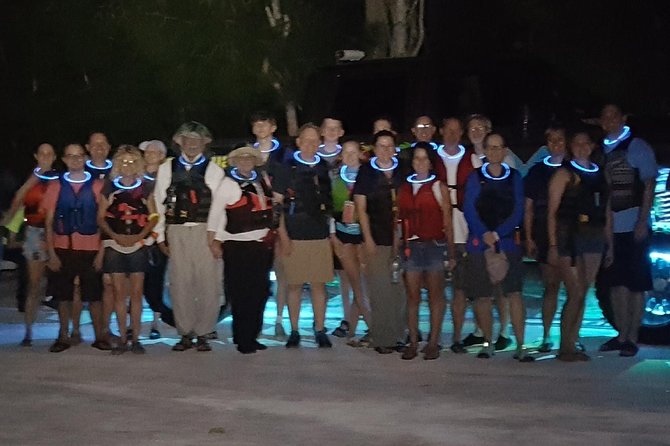
The guides stay with the group for the full trip. They explain the basic paddling technique, help people get settled, and keep an eye on the group as it moves through the dark water.
That steady supervision is especially valuable for first-timers. Several people with no previous kayaking experience found the outing manageable, and one guide helped calm a nervous child and keep him engaged. The pace is not described as strenuous, so you can focus on the surroundings instead of racing across the lagoon.
The tour can include periods of floating and looking rather than constant paddling. One person wanted more paddling and less time drifting. I see that as part of the tradeoff: floating gives you time to watch the water, hear the night sounds, and look for wildlife, but anyone expecting a workout may find the pace slow.
The guides also make choices based on conditions. One account described guides placing the group away from larger tour groups to find a quieter area. Another praised the company for putting safety first during a strong wind event. That matters at night, when wind and water conditions are harder to judge from shore.
Same water, a different day out on it:
- Thousand Island Mangrove Tunnel, Manatee & Dolphin Kayak Tour w/Cocoa Kayaking
★ 5.0 · 923 reviews - Manatee and Dolphin Kayaking | Wildlife Refuge (Titusville)
★ 5.0 · 241 reviews - Wildlife Refuge Manatee, Dolphin & Mangrove Kayak or Paddleboarding Tour!
★ 5.0 · 210 reviews - Dolphin and Manatee Kayak and SUP Adventure Tour of Cocoa Beach
★ 5.0 · 194 reviews
Searching for blue trails on the Indian River Lagoon
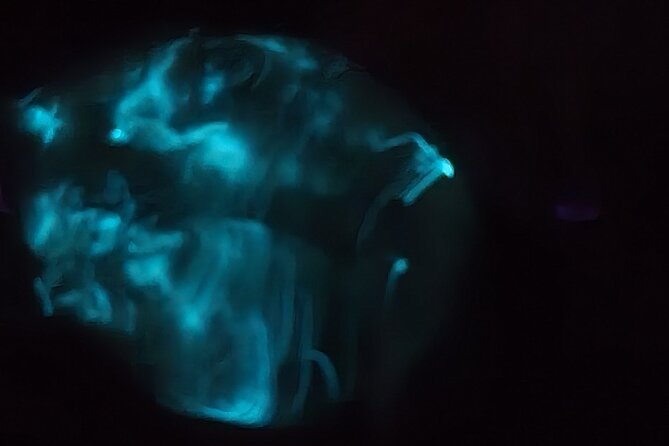
Once the kayaks spread out, the guide points out places where the water may show more activity. You will need to paddle or move your hand through the water to stir the organisms. The glow can appear as a bright blue streak, a quick spark, or a soft cloud around the paddle.
Do not expect the whole lagoon to glow like a swimming pool. The effect changes from night to night and even from one patch of water to another. A guide may stop the group, suggest a place to look, and give you time to test the water yourself.
The Indian River Lagoon and Banana River are important habitats, so the guide commentary adds value beyond the light show. Brian has been praised for explaining the ecosystem and animals in the area. Terrance has shared local history while patiently helping beginners. Clint has been singled out for his humor, nature information, and attention to safety.
This is one reason the tour can still work during a weaker season. If the glow is not dramatic, the guide may point out plants, animals, stars, and the character of the refuge area. Kate, for example, received praise for making an off-season trip educational and enjoyable even when the plankton activity was limited.
Comb jellies, fish, and other night wildlife
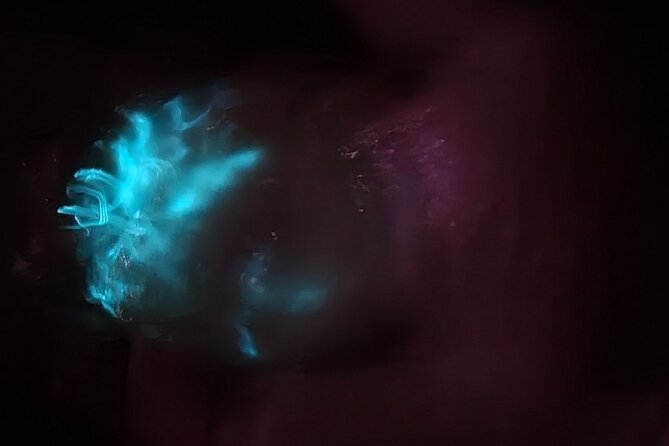
The most memorable wildlife encounters can happen close to the kayak. Fish may swim beneath you, their movement marked by blue light. A comb jelly can glow when handled gently by a guide, offering a strange little lesson in marine life.
You may see a blue crab, dolphin, manatee, alligator, or bird. Some people have even had fish jump into the kayaks, creating a comic moment during an otherwise quiet trip. These sightings are luck, not part of a guaranteed schedule.
The guides can help you notice details that are easy to miss in the dark. They may use a net to catch small creatures for a brief look and then release them. That hands-on element gives children something to focus on, while adults often enjoy the science and local ecology.
If you are hoping mainly for wildlife, keep your expectations flexible. You might see several species, or you might spend most of the hour watching the glowing water and sky.
When the bioluminescence is strongest
The peak season is July through October, with sightings possible as late as January. Booking during the peak period gives you better odds, but it does not guarantee a bright display.
The moon is an important consideration. A bright moon can make the night beautiful while washing out faint blue sparks. One outing had a bright moon and less visible bioluminescence, but the open-water night view was still striking.
Cold weather can also affect what you see. The company notes that a cold night may produce little or no visible glow. One October outing was disappointing for a group that expected stronger activity, while other October outings included clear blue water, stars, and comb jellies. That contrast tells you what you need to know: the calendar helps, but conditions matter more than a promise.
For the best odds, choose a date within July through October and ask about current conditions if you can. A late evening or darker time slot may help, but the available effect still depends on nature. The provider says rain checks may be available when there is no visibility, so ask about that policy directly if the water shows no glow at all.
What to bring for a wet, buggy evening
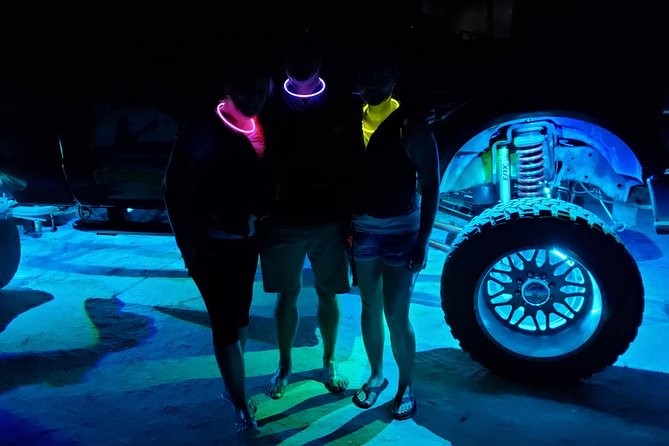
The included equipment keeps packing simple, but you still need a few essentials:
- Aquatic footwear or secure shoes that can get wet
- Bug spray, preferably applied before you launch
- A towel and a change of clothes
- A water bottle
- Sunscreen if you will be outside before sunset
- Cash for an optional tip
Mosquitoes are the most repeated practical warning. Several people found them intense, so use repellent before you arrive and consider long sleeves and long pants. Do not count on the water breeze to solve the problem.
Beverages, snacks, towels, and bug spray are not included. Keep your valuables to a minimum, since you are going onto the water and may get splashed. The tour lasts about 90 minutes, which is long enough to feel substantial but short enough for most people to manage without food or a major break.
Is $65 a fair price?
At $65 per person, the price is reasonable for a guided 90-minute outing because it includes the kayak, PFD, paddles, instruction, and guide. You are paying for equipment, supervision, and access to a night setting that would be difficult to handle alone.
The value is strongest if you are new to kayaking or want a family-friendly nature activity. You do not need to rent gear separately, plan a route, or judge the safest place to paddle in the dark. The guide also adds interpretation, wildlife spotting, and local background.
The value is weaker if your only goal is a dramatic blue glow. The display can be faint, and there is no guarantee of perfect conditions. In that case, book during the peak months and treat the stars, night sounds, guide stories, and wildlife as part of the full experience rather than as consolation prizes.
The tour has a maximum of 30 people. That is not an intimate private trip, but guides may divide attention among the group and take people toward quieter areas. The quality of the night depends partly on group size, guide choices, wind, and how well everyone handles the kayaks.
Who should book this tour?
I would recommend it to families with children age five and older, couples looking for an unusual evening, first-time kayakers, and anyone interested in Florida wildlife. The instruction is gentle, guides remain nearby, and the setting gives you something to do beyond another restaurant or beach sunset.
It is also a good fit for people who like nature more than adrenaline. You may spend time paddling, floating, listening, and waiting for flashes of blue. The tour is not a high-speed adventure.
I would hesitate if you dislike insects, cannot handle getting wet, or need a guaranteed visual spectacle. The water may be dim, the mosquitoes may be persistent, and the strongest light depends on conditions outside the operator’s control.
Free cancellation is available up to 24 hours before the start time. Cancellations or changes within 24 hours are not refunded or accepted, so check the weather and your schedule before that cutoff.
Should you book the Titusville bioluminescence kayak tour?
Yes, if you can accept a little uncertainty. The best parts are not limited to the blue water. You get a calm night paddle, a chance to see fish and comb jellies up close, a sky full of stars, and guides who appear to take both safety and teaching seriously.
Book between July and October for the strongest odds, bring serious bug spray, and prepare to get wet. If you want the most reliable possible show, ask about moon and recent water conditions before choosing your date. If you can treat the glow as one part of a wider night nature trip, the $65 price is a fair deal.
FAQ
Where does the bioluminescence kayak tour start?
The main launch is Haulover Canal Kayak Launch at Haulover Canal, Mims, Florida 32754. Some tours also launch from Kiwanis Island Park on Merritt Island.
How long does the tour last?
The kayaking trip lasts approximately 90 minutes.
What is included in the price?
The tour includes a kayak, PFD, paddles, and a guide.
How much does the tour cost?
The listed price is $65 per person.
What age can participate?
The stated age range begins at five years old.
What is the weight limit?
The maximum weight is 300 pounds for a single kayak and 600 pounds for a tandem kayak.
What should I bring?
Bring aquatic footwear, bug spray, a towel, sunscreen, a water bottle, and optional cash for tips. Beverages, snacks, towels, and bug spray are not included.
When is bioluminescence most visible?
Peak season is July through October, though sightings can occur as late as January. Visibility can change with moonlight, weather, and water conditions.
Can I cancel for a full refund?
Yes. You can cancel at least 24 hours before the experience start time for a full refund. Cancellations or changes made less than 24 hours before the start time are not refunded or accepted.
Just added around Cocoa Beach
- Cocoa Beach: Dolphin and Manatee Kayak or Paddle Tour★ 4.3 · 69 reviews
- Bioluminescent Clear Bottom Kayak or Paddleboard Sit-On-Top Kayak Hybrid Tour!★ 5.0 · 109 reviews
- Dolphin and Manatee Kayak and SUP Adventure Tour of Cocoa Beach★ 5.0 · 194 reviews
- Wildlife Refuge Manatee, Dolphin & Mangrove Kayak or Paddleboarding Tour!★ 5.0 · 210 reviews
- Clear Kayak Guided Kayak Tours in Titusville★ 5.0 · 116 reviews
- Clear Kayak Bioluminescence Tour★ 4.5 · 166 reviews
- Bioluminescence Clear Kayak or Paddleboard Tour Near Orlando★ 4.5 · 145 reviews
- Manatee and Dolphin Kayaking | Wildlife Refuge (Titusville)★ 5.0 · 241 reviews
Night and Bioluminescent Kayaking, side by side.
Phang Nga Bay Bioluminescent Plankton and Sea Canoes
Read our review →
Night Kayak Tour St. Thomas – Westin Frenchman’s Reef
Read our review →