
REVIEW · MANGROVE KAYAKING
From Tagbilaran City/Panglao Island: Bohol Mangrove Kayaking
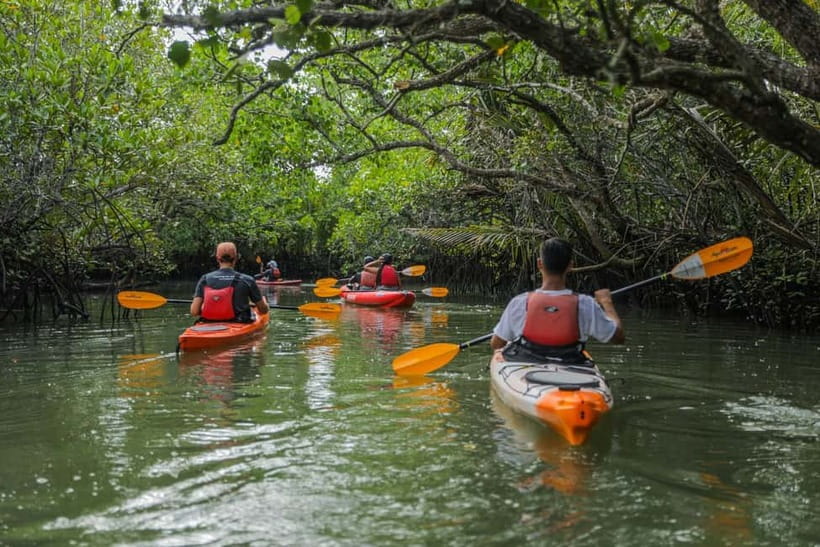
Leave the beach behind for a while. This five-hour Abatan River trip puts you in the kayak, not on a motorboat, as you paddle through old flooded forests and narrow mangrove passages. I like the quiet, small-group feel, and I like that local guides such as Vince and Jeremy explain the river, plants, birds, and community around it. The main consideration is physical: you need to paddle for up to two hours, and the tour is not suitable for non-swimmers, children under six, or people with mobility impairments.
The $64 price includes round-trip transport from Panglao Island or Tagbilaran City, equipment, instruction, river fees, food, drinks, water refills, and changing facilities. I also like that the tour has a clear conservation purpose, though pickup times can vary, and the drive from Panglao may take close to an hour.
Why this Abatan River trip is worth your time
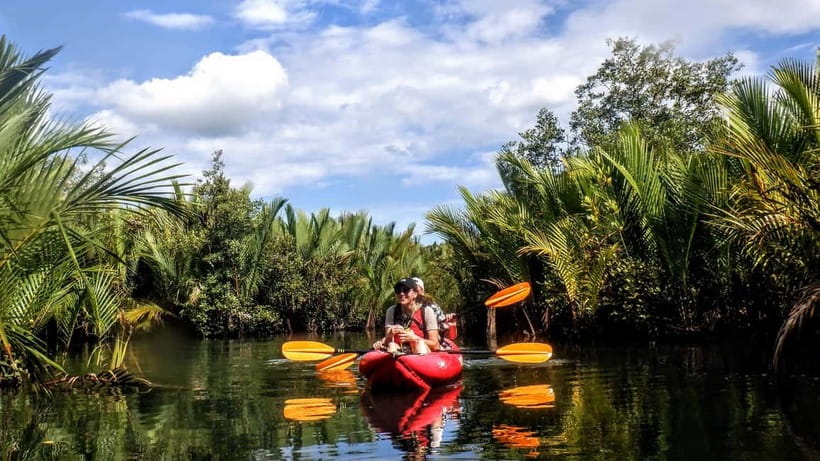
- You steer through real mangrove tunnels: The route uses narrow natural passages and sections of the main river, with no engine noise.
- The river supports 32 mangrove species: That includes the endangered Camptostemon philippinense, a useful reminder that this is a living habitat, not just a photo setting.
- Local guides lead the way: Guides such as Vince and Jeremy explain the ecosystem, local culture, wildlife, and the river community.
- The water time is limited to two hours: That makes the paddle manageable for beginners while leaving room for transport, food, and changing.
- Your fee covers more than kayaking: Transport, gear, lessons, safety instructions, community fees, refreshments, lockers, washrooms, and water refills are included.
- The experience is designed for quiet: Small numbers help keep the river calm and reduce pressure on the mangroves.
Entering Bohol’s quieter river country
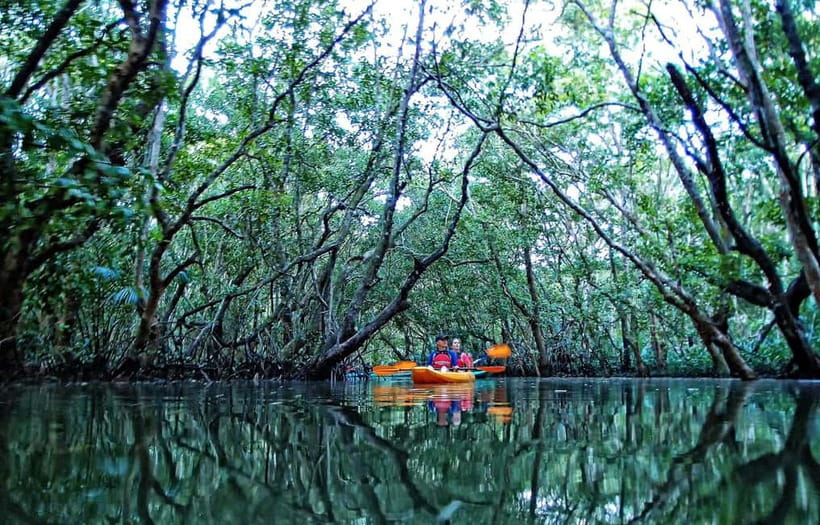
Most visitors come to Bohol for beaches, the Chocolate Hills, or the famous tarsiers. This trip offers a different view of the island. You leave the usual resort circuit and spend part of the day on the Abatan River, where mangrove roots, muddy banks, birds, and narrow waterways set the pace.
That change matters. A kayak moves slowly, and you notice details that are easy to miss from a van or boat. You may see crab holes in the mud, different mangrove plants, and birds passing above the trees. A heron overhead can be the only dramatic event for several minutes, which is exactly the point.
The route is called the Mangrove Tunnels Trail. Some passages narrow into forest corridors, while other sections open back onto the main river. The shifting route gives the paddle variety without turning it into a race. You are steering, correcting your course, and working with the current and the shape of the tunnel.
There is no motor to carry you along. That makes the experience more active, but it also gives you a closer connection to the place. You will hear your paddle, the water, and the sounds of the forest rather than a loud engine or a guide speaking through a microphone.
More Mangrove Kayak Tours in the world:
- Sarasota Guided Mangrove Tunnel Kayak Tour
★ 5.0 · 2,440 reviews - Key West Mangrove Kayak Eco Tour
★ 5.0 · 2,205 reviews - Krabi: Kayak Adventure through Ao Thalane Mangrove Forest
★ 4.6 · 2,024 reviews
The pickup ride from Panglao or Tagbilaran
The experience includes two-way transport from resorts in Panglao Island or Tagbilaran City. That is useful because the river station is away from the main beach areas, and you do not need to arrange a separate taxi or negotiate a one-way ride.
Allow extra time for the road portion. The stated drive is about 15 minutes from Tagbilaran City, while the journey from Panglao or Loboc can take around an hour. Another schedule estimate allows 30 minutes in the van, so the exact ride depends on your pickup point and the day’s road conditions.
The transport is not the most exciting part of the day, but it makes the tour easier to manage. If you are staying in Panglao, remember that the five-hour duration includes the transfer. You will not spend all five hours on the water.
The van ride also gives you a gradual change of scene. Resorts and town roads give way to the river area, where the focus shifts from sightseeing stops to a single natural setting.
Safety, lessons, and getting comfortable in the kayak
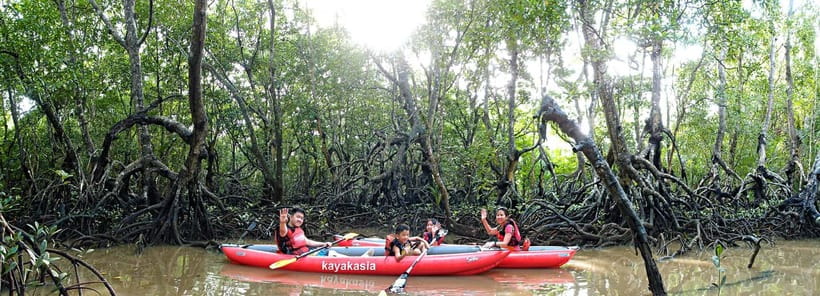
You do not need advanced kayaking skills. A basic lesson and a full safety briefing are provided before you start. The guide explains the equipment and gives you time to understand how to paddle and steer.
That matters for first-time paddlers. A kayak can feel less stable than a wide tourist boat, and the narrow mangrove passages require simple control. You will want to learn how to slow down, turn, and keep enough space from the banks before entering the tightest sections.
The maximum water time is two hours. For beginners, that is a sensible limit. You get a proper paddle without committing to an exhausting full-day expedition. Still, you should treat it as active sightseeing rather than a passive nature cruise.
The tour is not suitable for non-swimmers, children under six, or people with mobility impairments. Bring comfortable clothes or swimwear, sunscreen, insect repellent, and water. Water refills are available, but carrying your own bottle remains practical.
Paddling the Mangrove Tunnels Trail
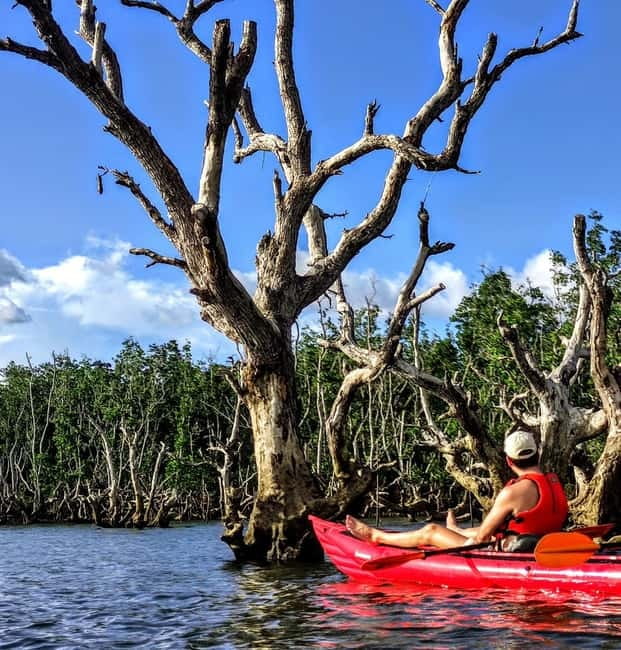
The heart of the trip is the paddle itself. You move through winding mangrove corridors where branches and roots shape the route. Some tunnels lead into quieter parts of the forest, while wider sections return you to the main river.
The guides do more than point out scenery. They explain how mangroves help prevent coastal erosion, provide nursery areas for fish, and store carbon. They also discuss the effects of typhoons and how the mangrove forest helps the area recover and resist damage.
Bohol’s river corridor contains 32 mangrove species. The endangered Camptostemon philippinense is among them. You do not need to be a plant expert to appreciate the significance. The variety helps explain why protecting this place has value beyond a pleasant afternoon on the water.
The route also connects the natural setting with local life. When the river opens up, the guide may explain local culture and the surrounding community. The experience gives you a better sense of the people who live near and care for the river.
The word tunnels is important here, but do not expect a constructed attraction with signs and fixed viewing platforms. These are natural passages. The route can feel narrow, shifting, and alive. That makes it memorable, though it also means the experience depends on water conditions and the guide’s judgment.
More Island Kayak Tours in the world:
- Phang Nga Bay Sea Cave Canoeing & James Bond Island by Big Boat
★ 5.0 · 4,666 reviews - Halong Bay Day Tour With Titop Island, Cave, Kayak & Lunch
★ 5.0 · 2,551 reviews - Phuket: James Bond Island Longtail Boat and Sea Canoe Tour
★ 4.8 · 2,364 reviews - Magnetic Island Discovery Tour with Snorkeling & Paddle Boarding
★ 5.0 · 1,372 reviews
What the guides add to the day
A strong guide can make a quiet river trip much more interesting, and this is one of the tour’s best features. Vince has been praised for explaining the surroundings, taking photographs, and allowing plenty of time rather than rushing the group through the route.
Jeremy is also noted for his background in the environment and for explaining the area at different stops. That style suits the trip. The river is not a place for constant narration, but short explanations at the right moments help you understand what you are seeing.
You can expect English and Tagalog guiding. The local guides are trained and certified paddlers who know the river well. Their role is both practical and educational: they help you move through the water, point out plants and birds, and connect the ecosystem to local history and community concerns.
The best approach is to ask questions. Ask about the mangrove species, crab holes, birds, typhoon damage, or how the community uses the river. You will get more from the outing if you treat the guide as a local interpreter rather than simply someone leading the route.
A quiet trip, not a staged eco-show
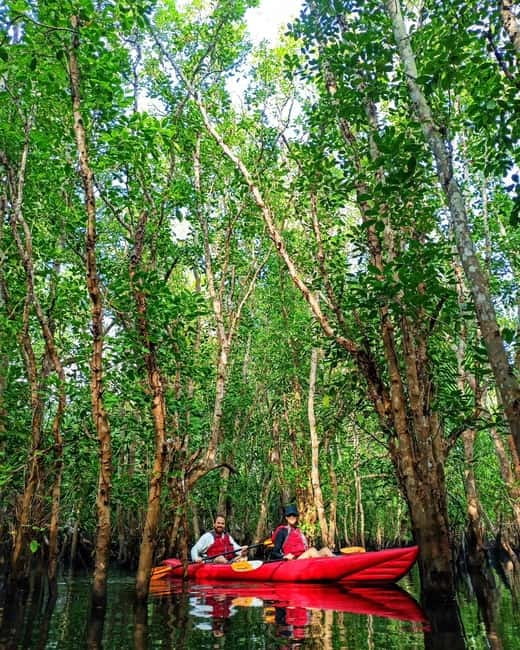
The tour’s conservation focus is more than a sign beside the kayak station. The route is part of an active conservation corridor, and the small-group format limits pressure on the forest. River usage and community fees are included, so your money supports access managed with the local river community.
That does not make the outing a scientific field trip. It is still a guided holiday activity, and wildlife sightings cannot be guaranteed. You might see birds, plants, and mud crabs, but the river will not perform on command.
This is also not a motorized wildlife ride. You will not cover the same distance with the same ease as you would in a powered boat. The benefit is a slower, quieter experience with less disturbance and more responsibility placed on you.
I see that trade-off as a strength for people who want a genuine sense of place. If you want constant action, big viewpoints, or a long list of stops, this may feel too calm. If you enjoy natural sounds and small observations, the pace works well.
Food, facilities, and the useful extras
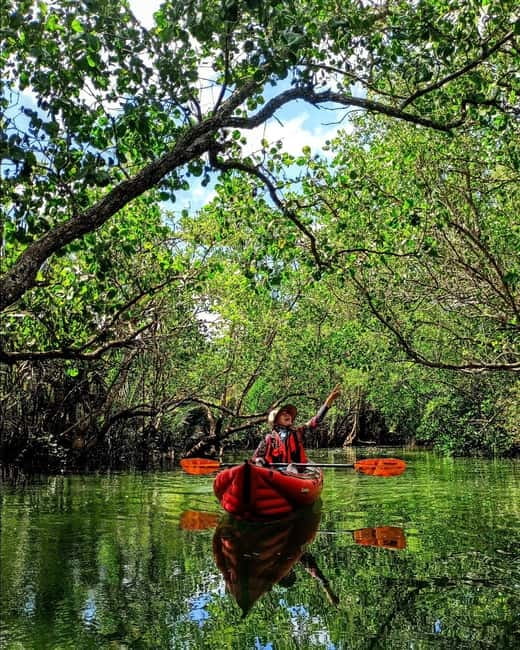
After the paddle, local snacks are provided, along with food and drinks during or after the kayaking. The meal has received particularly warm praise for its taste and generous portion. That is welcome after two hours of paddling, especially if you have started early or skipped a large breakfast.
You also have access to lockers, a washroom, and changing rooms. These facilities make it easier to wear swimwear or clothes suited to paddling without worrying about the ride back in a damp outfit.
Water refills are included. Bring a reusable bottle if you have one, and use sunscreen before you start. Insect repellent is also a smart addition for a forested river setting.
The food and facilities help justify the price. You are not paying only for time in a kayak. You are paying for transport, instruction, equipment, local access, refreshments, and a place to clean up afterward.
Is $64 a fair price?
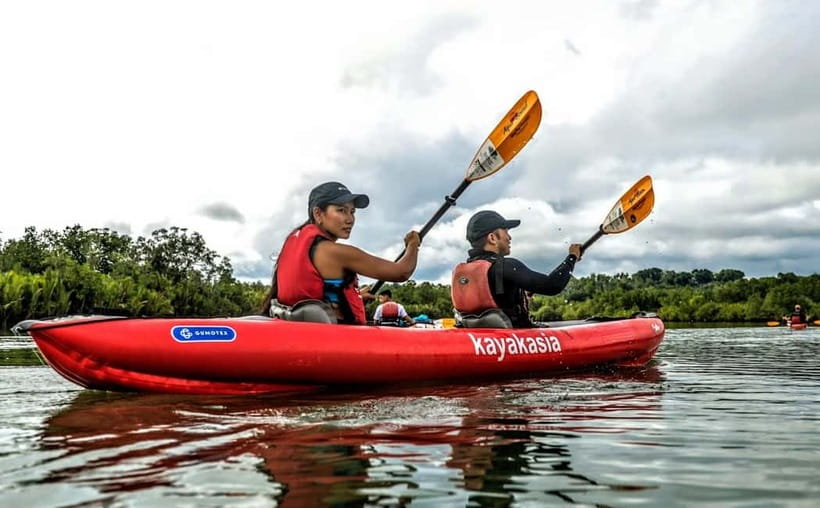
At $64 per person, this is not the cheapest way to spend a morning in Bohol. The value depends on what you would otherwise need to arrange yourself.
The fee includes two-way transport, kayak equipment, lessons, safety guidance, a professional guide, river and community fees, food, drinks, water refills, lockers, washrooms, and changing rooms. Add those items separately and the package becomes easier to defend.
The smaller scale also matters. Limited places help keep the river quiet and make it easier for the guide to give personal attention. The trip is not built around moving a large crowd quickly through a set of photo stops.
I would consider it good value if you care about nature, want an active outing, and prefer one substantial experience over several rushed attractions. It is less compelling if you want a cheap transport option or if kayaking sounds like work rather than fun.
The conservation element gives the price another layer. Protecting mangroves requires local support and a reason for communities to keep the forest standing. A tour that sends money toward river access and conservation has more lasting value than an activity that treats the setting as disposable scenery.
Who should book this experience?
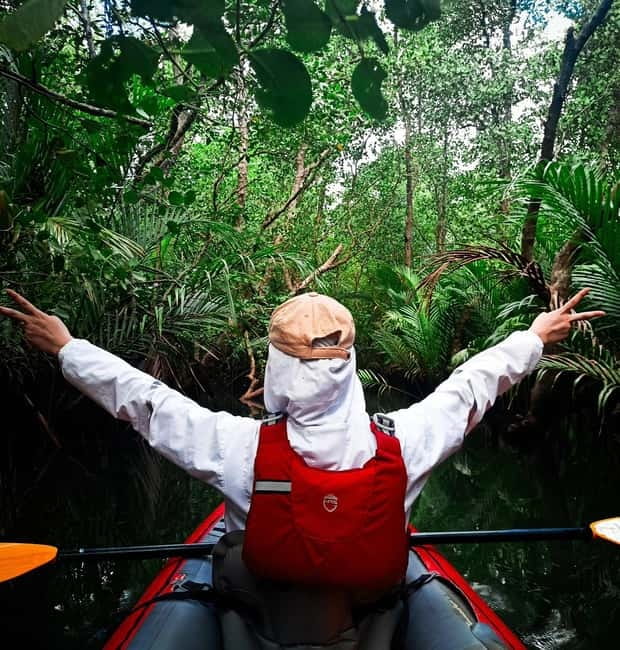
This trip suits first-time kayakers, couples, solo visitors, and small groups who enjoy quiet outdoor activities. You do not need advanced skills, but you should be comfortable paddling and swimming.
It is a good choice if you have already spent time on Bohol’s beaches and want to see a less familiar side of the island. It also suits anyone who prefers local explanations and natural surroundings to a crowded attraction.
Families should check the age rule carefully. Children under six cannot join, and the activity is not designed for people with mobility impairments. Non-swimmers should choose another river or sightseeing option.
You should also think about the weather, clothing, and transfer time. Bring clothes that can get wet, sun protection, insect repellent, and a camera. The guide may take photographs, as Vince has done for participants, but you should still protect your camera from splashes.
The paddle itself lasts no more than two hours, but the complete outing takes five hours. Plan the rest of your day around the pickup and return rather than squeezing this between fixed appointments.
My verdict on the Mangrove Tunnels Trail
I like this experience because it gives Bohol a quieter voice. You paddle rather than simply look, local guides explain rather than perform, and the mangrove forest gets to be a real ecosystem instead of a backdrop.
The strongest points are the calm setting, the small-group approach, the guides’ explanations, and the solid package of transport and practical facilities. The meal and snacks are a welcome bonus, not an afterthought.
The limits are clear. Panglao pickups can take time, the activity requires physical effort, and wildlife sightings are unpredictable. You also have only two hours on the water, so this is a focused outing rather than a full-day expedition.
Book it if you want an active, conservation-minded look at Bohol’s river country and you are happy with a slow pace. Skip it if you dislike paddling, cannot swim, or want a packed day of major sights. For the right person, this is one of the island’s more thoughtful ways to spend five hours.
FAQ
How long does the Bohol mangrove kayaking experience last?
The full experience lasts five hours. The maximum time spent on the water is two hours, with the rest covering transport, preparation, food, and changing time.
Where does pickup take place?
Round-trip transport is provided from resorts in Panglao Island or Tagbilaran City. The drive is about 15 minutes from Tagbilaran City and can take around one hour from Panglao or Loboc.
Is kayaking instruction included?
Yes. A basic kayaking lesson and a full safety briefing are provided before you enter the river.
What languages are available from the guide?
Guiding is available in English and Tagalog.
What should I bring?
Bring swimwear or comfortable clothes, sunscreen, insect repellent, water, and a camera. Water refills are available during the experience.
Who cannot join the tour?
The activity is not suitable for children under six, non-swimmers, or people with mobility impairments.
Just added around the world
- Paddle with the Penguins★ 4.5 · 19 reviews
- Kayak Chapman’s Peak and Karbonkelberg in Hout Bay★ 5.0 · 7 reviews
- 2-Hour Kayak Rental in Cape May per person★ 5.0 · 9 reviews
- Cape Cod Sunset Kayak Tour★ 5.0 · 9 reviews
- Guided Kayaking in Hout Bay★ 4.5 · 19 reviews
- Self-Guided Kayaking Manatee and Dolphin Tour★ 4.0 · 13 reviews
- Kayak The Creek Nature Tour★ 5.0 · 36 reviews
- Cape Cod Kayak Rentals in the Great Marsh★ 5.0 · 7 reviews
Mangrove Kayaking, side by side.
Kayak Adventure through Ao Thalane Mangrove Forest
Read our review →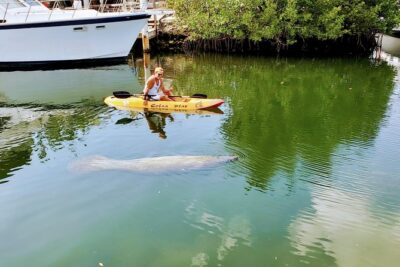
Mangroves and Manatees – Guided Kayak Eco Tour
Read our review →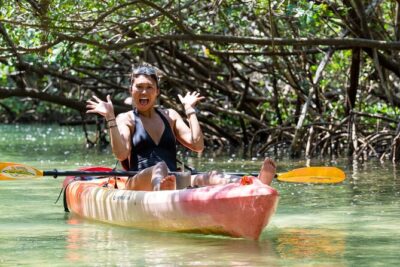
Sarasota Mangrove Tunnel Guided Kayak Adventure
Read our review →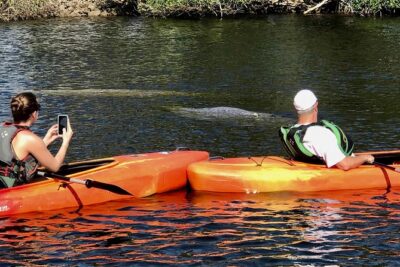
Manatees and Mangrove Tunnels Small Group Kayak Tour
Read our review →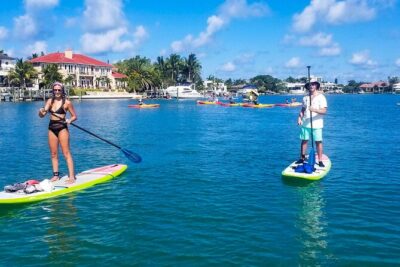
Mangroves, Manatees, and a Hidden Beach: Kayak Tour
Read our review →
Thousand Island Mangrove Tunnel, Manatee & Dolphin Kayak Tour w/Cocoa Kayaking
Read our review →This trip also sits in