
REVIEW · SPAIN KAYAKING TOURS
La Palma: Cueva Bonita Kayaking Tour
Sea caves make fine travel goals. This small-group kayak trip pairs Cueva Bonita with the unusual fishermens’ homes at Proís de Candelaria, giving you a close view of La Palma’s volcanic coast from the water. I like the chance to enter a cave that can only be reached by sea, and I like the personal feel of a group limited to seven people. The main drawback is simple: rough water can prevent access to Cueva Bonita.
You meet your guide at Proís de Candelaria, prepare your equipment, and spend about 1.5 hours on the water within a two-hour outing. I also like that the guide explains the area’s geology and past rather than treating the paddle as a quick photo stop. The tour is in Spanish, and it is not suitable for non-swimmers, so you should be comfortable in the sea before booking.
Key points to know before booking
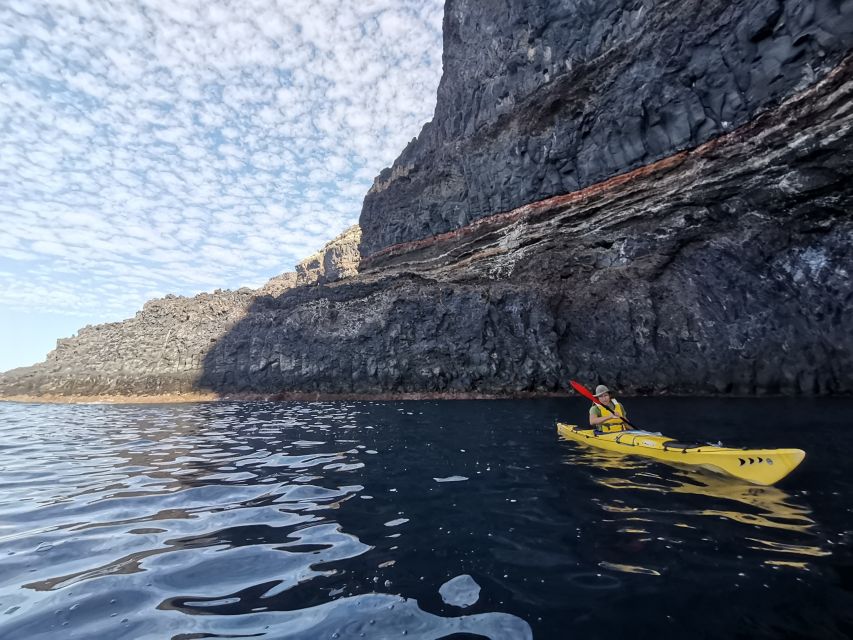
- Cueva Bonita is reached by kayak: This is the tour’s main prize, but entry depends on safe sea conditions.
- Proís de Candelaria is part of the attraction: The meeting point is a small cove with local homes built into sea caves.
- The group is limited to seven: That keeps the outing more personal and gives the guide room to help with basic paddling and safety.
- The paddle lasts about 1.5 hours: Allow roughly two hours in all for the briefing, changing, equipment, and return.
- The guide speaks Spanish: You will receive local information about the volcanic coast and its history in Spanish.
- The access road ends above the cove: You park at the end of the road and follow a walking path down to the sea, including a steep descent.
Proís de Candelaria is more than a meeting point
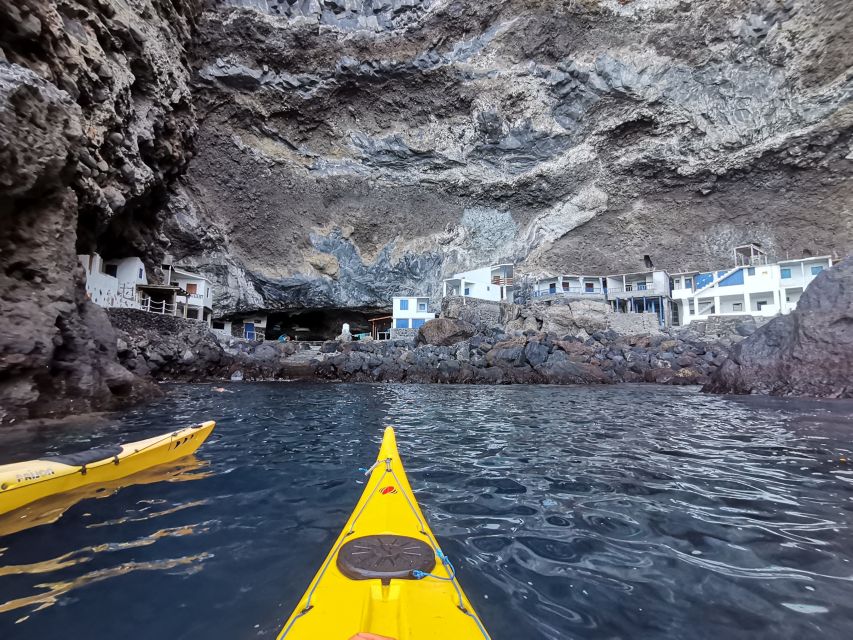
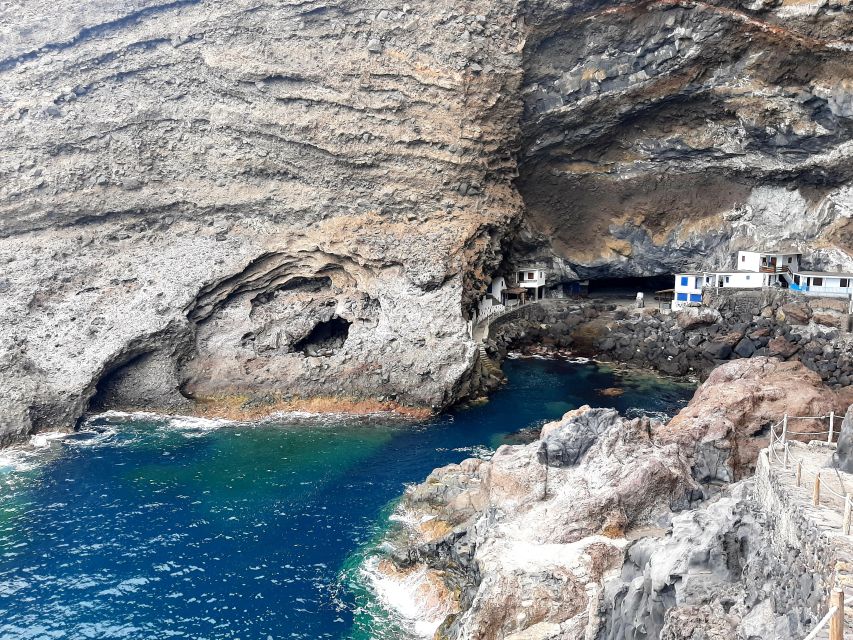
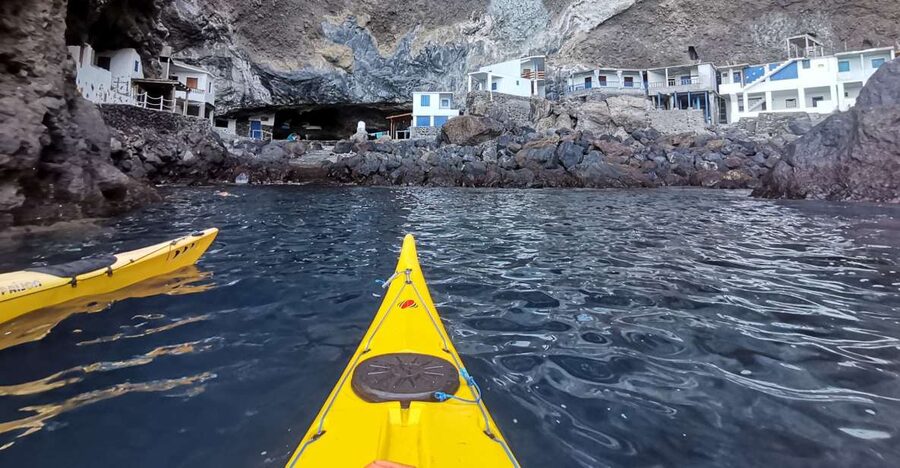
The tour begins at Proís de Candelaria, a small cove on La Palma’s coast. It is not just a neutral launch site. Local people have built homes in the many sea caves around the cove, giving the place an unusual mix of everyday life and dramatic geology.
That setting helps the tour feel connected to La Palma rather than like a standard equipment-and-paddle outing. Before you get in the kayak, your guide explains the area and gives you time to look around. I would arrive with enough time to take in the cove, since the approach is part of the experience.
Getting there requires a little effort. You park at the end of the road, then follow the walking path toward the sea. The descent is steep, and the journey down has been described as wild, so wear sensible shoes for the walk and avoid bringing anything you do not want to carry down to the water.
There is no hotel pickup or drop-off. You need to arrange your own transport to the meeting point, and food and drinks are not included. Bring water and sunscreen from the start.
A few more paddling days around Spain worth a look
- Tenerife: Kayak and Snorkel with Turtles, Wetsuits Included
★ 4.6 · 7,215 reviews - Barcelona Costa Brava Kayak, Snorkel & Cliff Jump Day Tour
★ 5.0 · 3,872 reviews - Ibiza: Beach Hopping Cruise w/ Paddleboard, Food, & Drinks
★ 4.5 · 3,224 reviews
The briefing makes the water time easier
Once you reach the cove, the guide gives you a short introduction and safety briefing. You then get fitted with the supplied lifejacket and prepare the kayak and paddle. Insurance is included, along with the equipment.
This part may sound routine, but it matters. A small sea kayak is different from sitting in a sightseeing boat. You need to listen to instructions, understand how to hold the paddle, and know what to do if the water feels less calm than expected.
The group size is limited to seven participants. That is a real advantage here. The guide can keep track of a small line of kayaks, answer questions, and offer more direct help than on a large commercial outing. It also means the tour should feel less crowded as you move along the cliffs and toward the caves.
The tour is guided in Spanish. If you understand Spanish, you will get the most from the explanations about local history and volcanic geology. The supplied information does not promise another language, so you should confirm that the guide’s Spanish-only format works for you before reserving.
Paddling the volcanic coast
The main paddle follows the coast toward Cueva Bonita. From the water, you get a different view of La Palma’s steep coastal rock than you would from a road or lookout. The cliffs, small openings, and dark volcanic surfaces are best understood at sea level, where the kayak can move close to places too narrow or low for a larger boat.
The pace is shaped by the group and by the water. This is not presented as a race or a hard fitness challenge. Still, you will be paddling for a substantial part of the outing, so you should be ready to use your arms and maintain your balance in a kayak.
The route also passes fishermens’ sea caves. These give the trip a strong local character. You are not simply heading toward one famous attraction, you are seeing how the coast has been used and inhabited. Your guide provides the context, pointing out details that could be easy to miss from the beach.
The sea can change the character of the trip. When conditions are calm, paddling into coastal openings feels intimate and direct. When the water is rough, the guide may need to alter the plan, and Cueva Bonita may not be accessible. That possibility is worth accepting before you book. The cave is a major reason to choose this activity, but it cannot be guaranteed in unsafe conditions.
Entering Cueva Bonita by kayak
Cueva Bonita is the centerpiece of the tour. The famous volcanic sea cave can only be reached by sea, and traveling into it by kayak gives you a close, quiet perspective that a larger boat cannot match.
The scale of the cave is part of its appeal. You approach from the open coast, pass through the entrance, and see the volcanic rock from inside. The experience depends heavily on the sea state, light, and the guide’s judgment. If the water is too rough, the cave may be off limits. That is not a flaw in the operation. It is the sensible safety decision for a sea-cave outing.
I would treat the cave as a bonus built into an excellent coastal paddle, not as a guaranteed stand-alone attraction. That mindset keeps the day worthwhile even if conditions prevent entry. You will still have Proís de Candelaria, the coast, the fishermens’ caves, and the guide’s explanations.
Avoiding a crowded tourist boat is another strong point. A kayak moves at a human pace and lets you take in the rock formations from close range. You are part of the scene rather than looking at it from a deck several meters away.
Same water, a different day out on it:
- Ibiza Beach Hopping Cruise with Paddleboards, Drinks and Food 6h
★ 5.0 · 5,588 reviews - Tenerife: Kayak Safari and Snorkel in a Marine Reserve
★ 4.5 · 3,214 reviews - Nerja: Guided Kayak Tour Nerja Cliffs and Maro Waterfall
★ 4.7 · 2,916 reviews - Barcelona: Costa Brava Kayak, Snorkel & Cliff Jump & Lunch
★ 4.9 · 2,391 reviews
What the guide adds to the trip
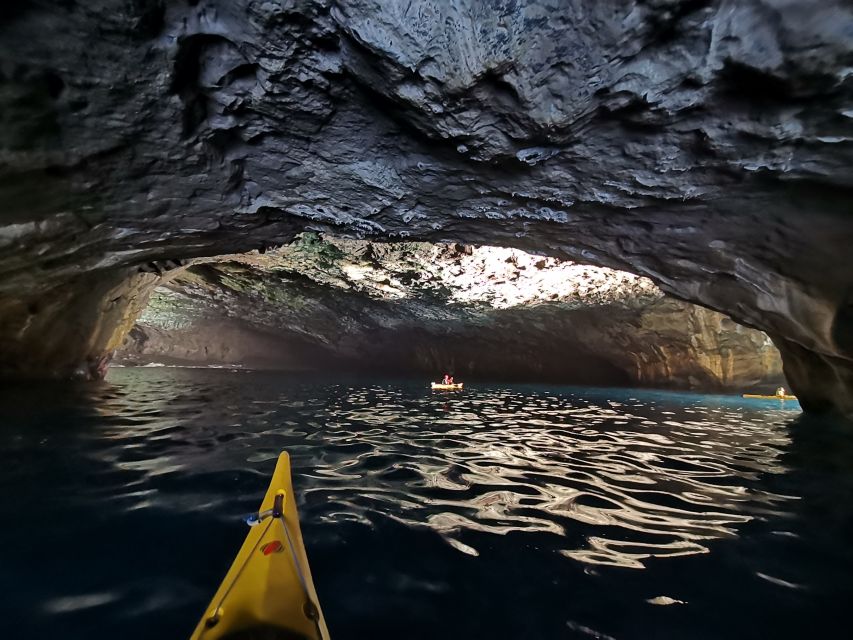
The guide’s role is more than leading the route. You receive information about the volcanic geology and history of the area, which gives shape to what you see. Caves become signs of how the coastline formed and how people adapted to it, rather than just dark openings in the rock.
The personal service is especially important in a group of seven. The guide can explain the route, watch the conditions, and help the group stay together. A highly praised guide named Numa is described as friendly, reassuring, and able to make participants feel safe. If Numa leads your departure, you can expect a warm and attentive approach based on that feedback.
Other feedback also highlights kind, enthusiastic guides and the sense that the outing offers good value for the time spent. That is useful here because your enjoyment depends partly on confidence. A guide who explains what is happening can make a first kayak outing feel manageable.
Keep in mind that the language is Spanish. A friendly manner helps, but it does not replace understanding safety instructions. If your Spanish is limited, ask before booking how much communication support is available.
Is $57 a fair price?
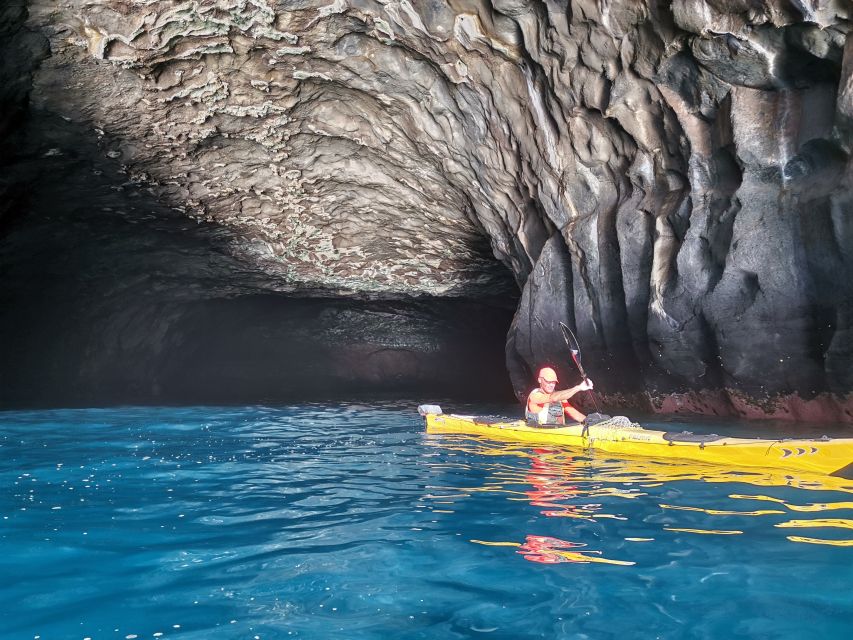
At $57 per person, this is priced as an active coastal activity rather than a simple beach rental. The fee includes the kayak, paddle, lifejacket, local guide, and insurance. You are also paying for access to a route that requires planning, sea knowledge, and a guide’s judgment around a cave.
The value is strongest if you want more than a short paddle. In about two hours, you visit a distinctive cove, learn about the coast, pass sea caves, and may enter Cueva Bonita. The small group adds value because you are not sharing the outing with a large crowd.
The price is less attractive if you mainly want guaranteed cave access. Sea conditions can stop the entry, and there is no food, drink, or transport included. Add the cost of getting to Proís de Candelaria, and the total day budget will be higher than the listed activity price.
For a couple or a small group looking for an active way to see La Palma, I think the price is reasonable. The combination of guide, equipment, insurance, and a limited group makes it more useful than renting a kayak without local direction.
Who should book this kayak trip?
This tour suits confident swimmers who enjoy being close to the sea and do not mind a little physical effort. It is a good pick if you want scenery, local context, and a small-group format rather than a passive sightseeing cruise.
It also works well for a special trip. One couple chose it during a honeymoon and described it as one of their favorite activities on La Palma. That makes sense: the setting is striking, the group is small, and the route offers something more personal than a standard lookout stop.
You should think twice if you are not a swimmer, feel uneasy around open water, or need a fully accessible route. The activity is specifically not suitable for non-swimmers, and the walk from the parking area includes a steep descent.
It may also be a poor choice if you need a firm, weather-proof schedule. Cueva Bonita may be inaccessible in rough conditions. The wider coastal paddle can still be worthwhile, but you should be comfortable with that uncertainty.
Practical advice for a smooth outing
Bring sunscreen and water. There is no food or drink included, and the coastal setting gives you little reason to expect supplies at the meeting point.
Wear shoes suitable for the path to the cove. You will park at the end of the road and walk down toward the sea, so footwear made for a steep, uneven approach is more useful than flip-flops.
Check the meeting directions carefully. The activity does not begin at a large marina or hotel lobby. You need to find the end of the road, park, and continue on foot to Proís de Candelaria.
Allow the full two hours. The actual time on the water is about 1.5 hours, but the briefing, equipment, and return are part of the schedule. Starting times vary, so check availability for the date you want.
Finally, keep your plans flexible around the sea. If conditions prevent entry to Cueva Bonita, the guide’s decision is based on safety. The most sensible way to book is to value the whole coast trip and regard the cave as the highlight when nature permits.
Should you book the Cueva Bonita kayak tour?
I would book this tour if you are a swimmer who wants a close look at La Palma’s volcanic coast, prefers a small group, and can manage a Spanish-guided outing. The combination of Proís de Candelaria, fishermens’ caves, and a possible kayak entry into Cueva Bonita gives the activity a clear sense of place.
I would skip it if you need hotel pickup, guaranteed cave access, included refreshments, or a route that avoids a steep walk. For the right participant, though, $57 is a fair price for equipment, insurance, a local guide, and an active coastal outing that feels more personal than a crowded boat trip.
FAQ
How long does the Cueva Bonita kayaking tour last?
The full activity lasts about two hours. Around 1.5 hours is spent on the kayak, with the remaining time used for the introduction, safety briefing, equipment, and return to the meeting point.
Where does the tour begin?
You begin at Proís de Candelaria. Park your car at the end of the road, then follow the walking path toward the sea and the meeting point near the cove.
Does the tour include hotel pickup?
No. Hotel pickup and drop-off are not included, so you need to arrange your own way to Proís de Candelaria.
Is Cueva Bonita always accessible?
No. Cueva Bonita may not be accessible if sea conditions are rough. The guide decides whether entering the cave is safe.
Is the tour suitable for non-swimmers?
No. The activity is not suitable for non-swimmers.
What equipment is included?
The price includes the kayak, paddle, lifejacket, local guide, and insurance.
What language is the tour conducted in?
The live tour guide speaks Spanish.
Just added around Spain
- Paddle Surf in Cantabria★ 4.5 · 21 reviews
- Kayak Route + Snorkel in Cantabria★ 4.5 · 9 reviews
- Small Group Paddle Surf Experience in Benidorm★ 4.0 · 7 reviews
- Paddle Board Paradise: Magical Snorkel & Cave Exploring SUP Tour★ 5.0 · 10 reviews
- Moonlight Kayak with Dinner Included★ 4.5 · 6 reviews
- Route in Kayak Moraira★ 5.0 · 28 reviews
- Kayak route through Cala Granadella★ 5.0 · 27 reviews
- Kayak routes through the Coves of Villajoyosa★ 4.5 · 42 reviews
Spain Kayaking Tours, side by side.
Kayak and Snorkel with Turtles, Wetsuits Included
Read our review →
Ibiza Beach Hopping Cruise with Paddleboards, Drinks and Food 6h
Read our review →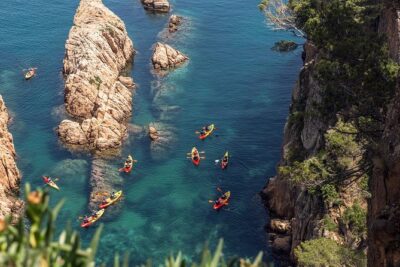
Barcelona Costa Brava Kayak, Snorkel & Cliff Jump Day Tour
Read our review →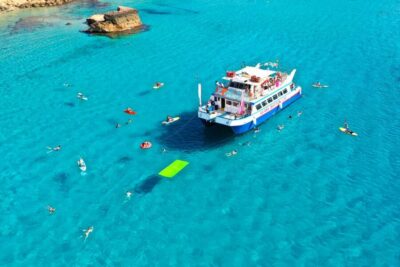
Beach Hopping Cruise w/ Paddleboard, Food, & Drinks
Read our review →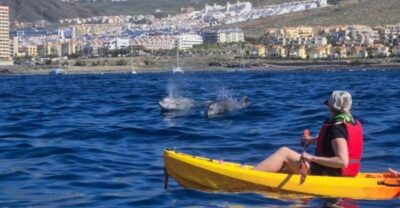
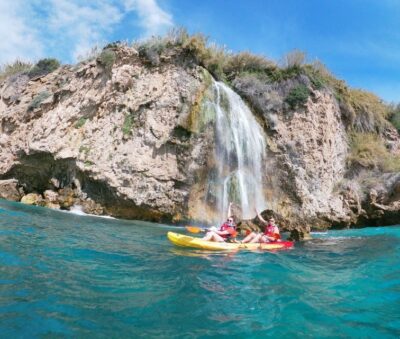
Guided Kayak Tour Nerja Cliffs and Maro Waterfall
Read our review →
Costa Brava Kayak, Snorkel & Cliff Jump & Lunch
Read our review →
This trip also sits in