REVIEW · CANOE TRIPS
Southern Lakes Canoe Trip – 4 Day
The quiet starts after the first portage. This four-day canoe trip carries you from Keji Lake into the park’s remote southern lakes, where small waterways, campfires, and isolated campsites replace roads and phone-friendly sightseeing. I especially like that canoes, camping gear, safety equipment, and meals are supplied, and I like the small-group limit of five people. The main drawback is effort: repeated portages, changing weather, and four days of carrying gear require a moderate level of fitness.
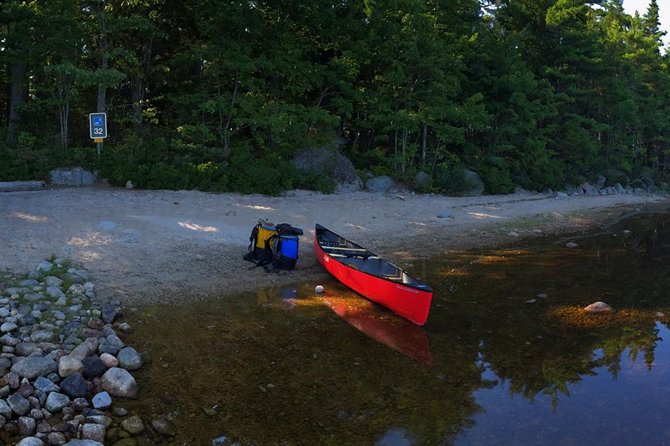
You will paddle for three days through linked lakes, stop for swims and shore lunches, and sleep at backcountry campsites reached by water or trail. French-press coffee and hot campfire breakfasts are welcome touches, especially after a night outdoors. The sturdy canoes have earned praise for handling wind and waves, though some paddlers may wish for lighter boats during the portages.
The price is CA$1,108.28 per person, before the park admission fee. That is a serious outlay, but it covers most of the costly and awkward parts of a wilderness trip: boats, camping equipment, safety gear, private outhouses, and nine listed meals. You still need to bring your clothing, toiletries, pillow, and a willingness to carry your share.
Key points before you book
- Three days on remote southern lakes: Much of the route reaches quiet water with few signs of settlement.
- Small maximum group of five: This keeps the canoe party manageable on portages and around camp.
- Camping equipment and canoes included: You do not need to assemble a full backcountry kit.
- Hot meals and French-press coffee: Three breakfasts, three dinners, and four lunches are listed in the detailed inclusions.
- Portages are part of the trip: Expect to carry gear between small and medium lakes.
- All-weather departure: Dress for changing conditions, and understand that this is an active outdoor trip, not a casual paddle.
Why the southern lakes feel so remote
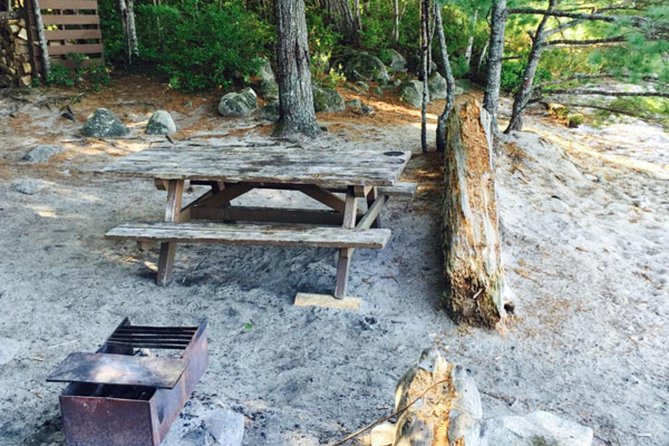
Kejimkujik National Park is well suited to canoe travel because the route links lakes of different sizes with portage trails. The appeal here is not one dramatic viewpoint. It is the steady change from open water to narrow routes, from active paddling to quiet campsites, and from the park’s main access area to places that feel far removed from roads.
The southern lakes are often uninhabited. You might pass another canoe on a lake or meet someone on a portage, but the route is designed to give you long stretches without nearby buildings or crowds. That makes the trip appealing if you want a proper backcountry experience without bringing every piece of gear yourself.
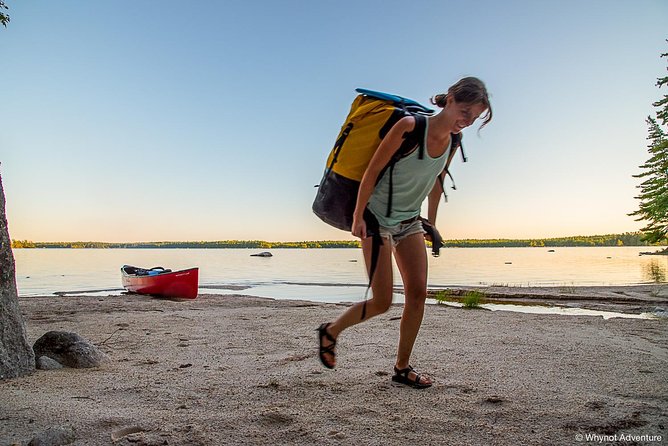
You should set your expectations correctly. The quiet comes with work. You will paddle, unload, carry equipment over portages, reload, and repeat the process. The route uses small and medium lakes, so the trip is about moving through a connected water system rather than sitting in one location for four days.
The group size matters here. With a maximum of five people, the party should be easier to organize than a large canoe convoy. You will have less waiting at launches and campsites, though you still need to cooperate closely with the rest of the group.
More Canoe Trips in Canada
- Banff National Park Big Canoe Tour
★ 5.0 · 303 reviews - From Toronto: Algonquin Park Canoeing & Hiking Adventure
★ 4.6 · 291 reviews - Banff National Park: Big Canoe River Explorer Tour
★ 4.7 · 286 reviews
Day 1: From Whynot Adventure to the first camp
The meeting point is Whynot Adventure, The Keji Outfitters, at Jake’s Landing, 1507 Kejimkujik Main Parkway in Maitland Bridge. The supplied details list a 10:30 a.m. start time, while the day plan says to arrive between 11:30 a.m. and 12:30 p.m. Because those times do not match, confirm the exact arrival time after booking.
The first day begins with meeting the group, having lunch, and paddling across Keji Lake. This opening section gives you a useful introduction to the canoe and the rhythm of loading, paddling, unloading, and carrying. If you have not done a multi-day canoe trip before, pay attention to how the equipment is arranged. Efficient packing becomes more important with each portage.
From Keji Lake, you begin a chain of portages connecting small and medium lakes. The first day is likely to feel busy because you are learning the route while carrying camping equipment and food. The trip description does not provide distances or the number of portages, so you should not assume an easy mileage-based outing.
At camp, the group sets up tents and prepares a campfire dinner. Dinner is included, which saves you from planning and carrying every meal on your own. You still take part in camp duties, so this is not a fully catered lodge holiday. The reward is a simple evening beside the water, with the work of the day behind you.
The park admission fee is not included. The stated charge is CA$6.50 per person, so add that to the advertised tour price.
Day 2: Medium lakes, portages, and a swim
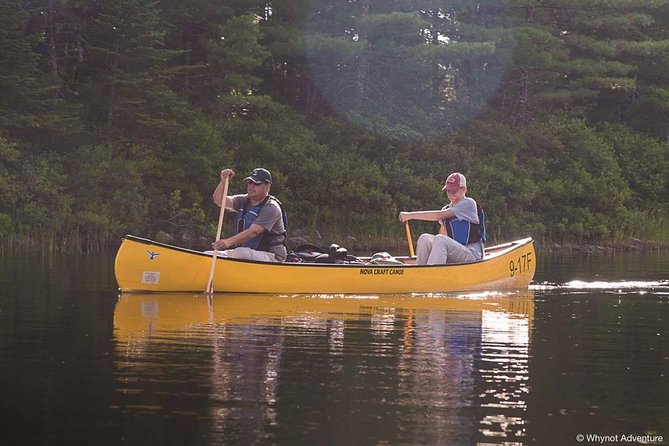
Day two starts with French-press coffee and a hot breakfast cooked over the campfire. That detail may sound small, but it matters outdoors. A warm drink and a proper breakfast make an early pack-up far more pleasant than starting on snacks and cold food.
After breakfast, you break down camp, repack the canoes, and continue across medium-sized lakes. Portages remain part of the route. You should expect to carry equipment more than once, and the weight will feel different depending on how much personal gear you bring.
The schedule includes a lunch stop and time for a swim. This gives the day a natural rhythm: paddle, carry, pause, eat, and get back on the water. You are not rushing from one attraction to the next. The lake itself is the main experience.
The evening campsite is selected along the route, then camp is set up again before dinner. The campsites are described as isolated, with little sound or sight of anyone outside your party. That level of quiet is a real strength for anyone who finds ordinary campgrounds too social or crowded.
It is also the point where fatigue may begin to show. You should be comfortable with a moderate physical effort and with helping carry communal supplies. The canoes are sturdy and stable, a useful advantage if wind or waves pick up, but a stable canoe is not the same as a light canoe. Portages may be the hardest part of the day.
Day 3: The heart of the backcountry route
The third morning follows the same dependable pattern: French-press coffee, a hot campfire breakfast, camp breakdown, and canoe packing. By now, you should understand the daily routine, which lets you spend more attention on the water and the quiet around you.
You continue through medium lakes and connecting portages, with another lunch and swim stop planned. Since exact distances are not provided, your experience will depend partly on weather, paddling pace, group rhythm, and portage conditions. It is wise to treat the schedule as a framework rather than a promise of a precise arrival time.
This is likely the day when the southern lakes feel most rewarding. You are farther into the route, familiar with the canoe, and removed from the starting point. The absence of nearby homes and roads becomes more noticeable. In calm weather, the trip can feel almost entirely self-contained: your group, the canoe, the forest, and the water.
That isolation is also why good preparation matters. Bring suitable personal clothing, toiletries, and a pillow, since those items are not supplied. The tour operates in all weather, so pack layers and rain protection rather than relying on a perfect forecast.
A final campfire dinner follows the day’s paddling. The detailed inclusions list three dinners, matching dinners on the first three nights. The shorter overview describes only two dinners, so I would confirm the meal plan when you receive your booking confirmation.
More Lake Kayak Tours in Canada
- Banff/Canmore Moraine Lake & Lake Louise– Hike, Canoe or Sightsee
★ 5.0 · 104 reviews - Banff/Canmore Moraine Lake & Lake Louise-Hike/Canoe/Sightsee
★ 5.0 · 44 reviews - Paddling Thetis Lake
★ 5.0 · 31 reviews - Small Grp: Emerald Lake (Optional Canoe) & Takakkaw Falls
★ 4.7 · 19 reviews
Day 4: Returning to Keji Lake
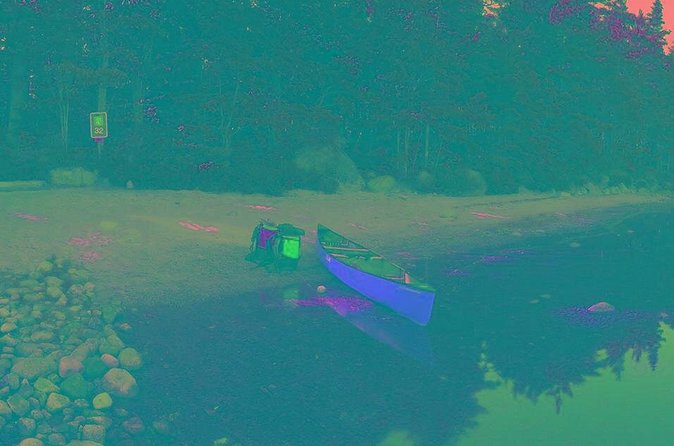
The final morning begins with the same hot breakfast and coffee. You pack camp for the last time, reload the canoes, and work back toward Keji Lake.
The return is not simply a quick exit. You still paddle and carry equipment, then stop for lunch on the shore. That final meal gives you time to slow down before the last stretch to Whynot Adventure.
The planned return is around 2 p.m., with roughly three hours listed for the final day. The activity ends back at the starting point, which makes onward travel simpler. You do not need to arrange a separate pickup from a distant take-out point.
A four-day trip can be a good length for testing backcountry canoe travel. You get enough time to settle into the routine and reach quiet water, but you are not committing to a week in the woods. If you already enjoy canoe camping, you may find the trip pleasantly short. If this is your first extended outing, four days gives you a meaningful taste of the experience without making the commitment enormous.
What the price covers at CA$1,108.28
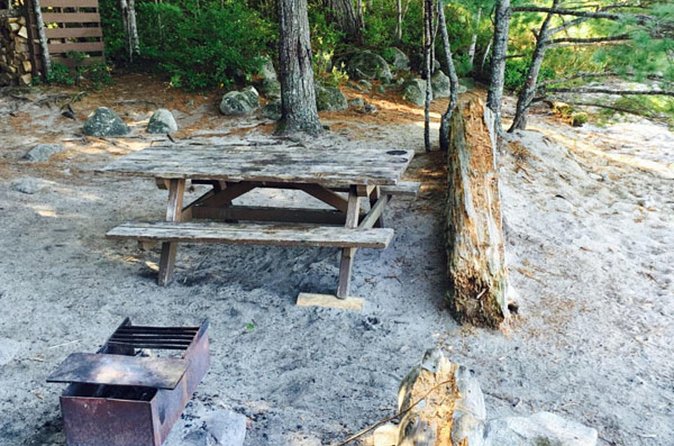
At CA$1,108.28 per person, this is not a budget day trip. The value depends on how much equipment you already own and how comfortable you are organizing a wilderness route yourself.
The package includes canoeing equipment, camping equipment, safety equipment, and private outhouses. It also includes the listed meals: four lunches, three dinners, and three breakfasts. Coffee is specifically part of the breakfast routine, served French-press style at camp.
That is a useful package for someone who wants backcountry access without buying or transporting a canoe, tent system, cooking setup, and safety kit. It also reduces the planning burden. You still need to bring your own clothing, toiletries, and pillow, and you pay the park admission separately.
The strongest value comes from the equipment and access. Whynot Adventure is located at Jake’s Landing, close to the park’s canoe routes, so you can begin from the outfitter rather than arranging a complicated equipment transfer. The company has also been praised for clean, sturdy canoes, organized preparation, and friendly help with trip planning.
The main limitation is boat weight. The canoes are described as stable and capable, including in wind and waves, but some paddlers would prefer ultralight canoes for easier portaging. If carrying strength is a concern, ask what canoe models are available before paying.
Equipment, service, and the practical details
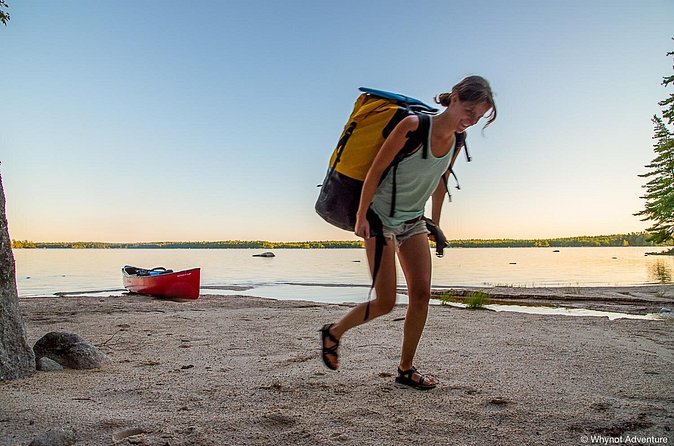
The equipment is one of the safest reasons to choose this trip. You receive the main items needed for canoe travel and camping, and the canoes are prepared at the starting point. You are not left to locate separate rental companies for each part of the trip.
The outfitter has also shown flexibility with changes and last-minute requests in past dealings. That can be valuable when planning a route in a park, though you should not rely on last-minute changes for a trip with limited space.
Bring clothing suited to rain, wind, cool mornings, and warm paddling periods. The tour runs in all weather, so a forecast calling for sunshine should not be your only planning tool. Personal toiletries and a pillow are not included, and you should provide dietary requirements when booking.
Service animals are allowed. The activity requires a moderate physical fitness level, and the small group maximum is five people. Confirmation is sent within 48 hours, subject to availability.
The cancellation rules are firm. Cancel at least six full days before the start for a full refund. Cancellation two to six full days ahead receives a 50 percent refund, while cancellation less than two full days ahead is not refunded. If poor weather or an insufficient minimum group causes the operator to cancel, you are offered another date or experience, or a full refund.
Who will enjoy this canoe trip most
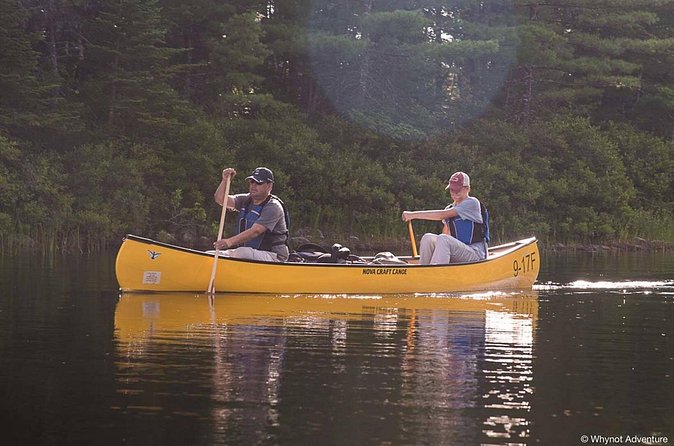
I would choose this trip if you want genuine backcountry time but do not own all the required gear. It suits people who enjoy quiet camps, shared chores, paddling, and the modest discomforts of outdoor travel.
It is also a good option for a small group of friends or family members who want a structured route. The included meals and supplied equipment leave fewer planning jobs on your list, while the four-day length gives you enough time to get beyond the busy starting area.
You should think twice if you dislike carrying loads, wet weather, basic camping, or changing daily conditions. The private outhouses are practical, but this is still backcountry camping. The trip is not designed as a gentle sightseeing cruise.
Paddlers who value stability may be pleased with the canoes. If you care more about reducing portage weight, ask about lighter boats before booking. That single detail could affect how enjoyable the route feels.
Should you book the Southern Lakes Canoe Trip?
Book it if you want a small-group canoe journey into quiet Kejimkujik country and appreciate having the major gear and meals handled for you. The strongest features are the remote campsites, the simple daily rhythm, the reliable equipment, and the chance to paddle for three days without building the whole trip from scratch.
Skip it if you want a low-effort outing or a tightly timed sightseeing tour. Portages and weather are part of the deal, and the price is high unless you place real value on supplied equipment, meals, and access.
Before paying, confirm the start time and meal count, ask about canoe weight, and be honest about your fitness. If those details suit you, this is a thoughtful way to experience Kejimkujik’s quieter waters.
FAQ
Where does the canoe trip start?
It starts at Whynot Adventure, The Keji Outfitters, at Jake’s Landing, 1507 Kejimkujik Main Parkway, Maitland Bridge, Nova Scotia, B0T 1B0, Canada.
What time does the trip start?
The meeting information lists a 10:30 a.m. start. The day-one plan gives an arrival window of 11:30 a.m. to 12:30 p.m., so confirm the exact time after booking.
How long is the experience?
The canoe trip lasts approximately four days. The final day is listed as about three hours, with a return to Whynot Adventure around 2 p.m.
How many people can join?
The maximum group size is five travelers.
Is park admission included?
No. Admission to Kejimkujik National Park and National Historic Site is listed separately at CA$6.50 per person.
What meals are included?
The detailed inclusions list four lunches, three dinners, and three breakfasts. French-press coffee and hot campfire breakfasts are part of the morning routine.
Is camping equipment provided?
Yes. Camping equipment, canoeing equipment, safety equipment, and private outhouses are included.
What should I bring?
You need to bring a pillow, personal clothing, and toiletries. You should also dress appropriately for all weather conditions.
Can I cancel for a refund?
You can receive a full refund if you cancel at least six full days before the start time. Cancellation two to six full days ahead receives a 50 percent refund, and cancellation less than two full days ahead is not refunded.
More 4-Day Experiences in Canada
- Algonquin Park 4-Day Deluxe Camping & Canoeing Adventure
★ 5.0 · 33 reviews
Just added around Canada
- Vancouver: Snorkeling Seals Kayaking Scenic Boat Tour★ 5.0 · 38 reviews
- Daily SUP Paddleboard Rentals Package in Metro Vancouver★ 5.0 · 18 reviews
- Intro to Stand Up Paddleboarding, Banff National Park★ 5.0 · 35 reviews
- Wildlife on the Bow | Big Canoe Tour★ 4.5 · 13 reviews
- Banff National Park- Double Kayak Experience★ 5.0 · 17 reviews
- Banff National Park Big Canoe Tour★ 5.0 · 52 reviews
- Algonquin Park 4-Day Deluxe Camping & Canoeing Adventure★ 5.0 · 33 reviews
- 3 Day Algonquin Park Canoe Trip – Moose & Beaver Safari★ 5.0 · 27 reviews
Canoe Trips, side by side.
Phang Nga Bay Sea Cave Canoeing & James Bond Island by Big Boat
Read our review →James Bond Island Longtail Boat and Sea Canoe Tour
Read our review →
Phang Nga Bay Bioluminescent Plankton and Sea Canoes
Read our review →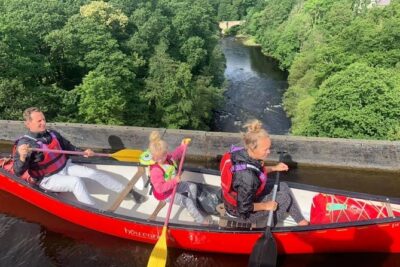
Pontcysyllte Aqueduct Canoe Tours in Llangollen
Read our review →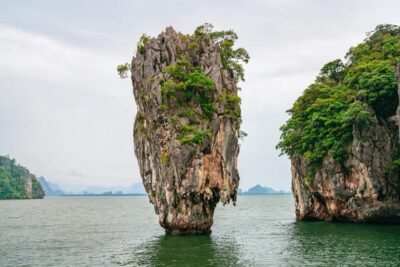
Twilight Sea Canoe & Highlight Glowing Plankton
Read our review →